Blog Archives

クレアフォーラム開催(2月22日)

2017年2月22日(水)、2017年クレアフォーラムを開催しました。

テーマ「地方創生」

会場 ジュニー アセニアムシアター

(Junee Athenium Theatre)

主催 クレアシドニー事務所

共催 シドニー工科大学公共政策研究所

(Institute for Public Po…

兵庫県三田市活動支援(2月13日)

2月13日、兵庫県三田市商工会がシドニー事務所を訪問され、オーストラリアにおける物産や経済状況について意見交換を行いました。

今回は三田市の姉妹都市であるブルーマウンテンズ市との経済交流及び三田市の日本酒・ビールの売り込みの可能性を調査するため、来豪されました。残念ながら…

岡山県活動支援(2月10日)

2月10日、岡山県県民生活部国際課がシドニー事務所を訪問され、日豪間の姉妹都市交流の現状及び周年事業について意見交換を行いました。

岡山県と南オーストラリア州は1993年5月に姉妹県・州提携がなされ、2018年に25周年を迎えます。今回はこの姉妹提携25周年の記念式典等の…

大阪市・神戸市・堺市(2月6日)

2月6日、大阪市・神戸市・堺市の職員がシドニー事務所を訪問され、オーストラリアの訪日市場について意見交換を行いました。2月4日・5日にシドニーオリンピックパークにて開催された旅行博への出展及びシドニー市内の旅行会社等への宣伝活動のために来豪されました。三都市を漏れなく周…

愛媛県活動支援(2月6日)

2月6日、愛媛県庁産業経済労働部及び営業本部がシドニー事務所を訪問され、オーストラリアにおける物産や観光誘致について意見交換を行いました。

今回は伊予柑を中心とした柑橘果汁等の試飲・試食イベント開催で来豪されました。最近、オーストラリアでは、都市部を中心にゆず等の日本の柑…

豪州多文化主義政策交流プログラム開催に係る関係先訪問(2月6日~7日)

平成29年度に同プログラムをメルボルンで開催するにあたり、主要な機関や視察先候補を訪問し、関係強化を行いました。

まず6日は、AMES Australia(以下、AMES)において本番での視察及び他の視察先候補地の相談をしました。AMESはビクトリア州の多種多様な多文化プロ…
静岡県焼津市・ホバート市姉妹都市40周年記念式典への参加(2月2日~5日)

2月3日、静岡県焼津市と姉妹都市であるタスマニア州ホバート市において、姉妹都市交流40周年式典が開催されました。Sue Hickeyホバート市長と中野弘道焼津市長が、これまで40年間に渡って交流を続けてこられた方々に対しての感謝を伝えたとともに、引き続き両市の交流が深まる…

自治体国際化フォーラム記事執筆に係る調査(2月1日~3日)

2月1日から3日にかけて、ニュージーランドのオークランド市を訪問し、「住みよい都市」についての調査を行いました。オークランド市はEconomist Intelligence Unitの「住みよい都市ランキング」において世界8位にランクインしており、市も「世界一住みよい都市」…

自治体国際化フォーラム記事執筆に係る調査(1月19日~20日)

1月19日から20日にかけて、自治体国際化フォーラム4月号特集記事「世界の住みよい都市に学ぶ」の執筆にあたり、メルボルンの住みよさの要因や課題について、住居・健康・住みよさ研究プログラム協議会(Place, Health and Liveability Research Prog…

CLAIR Forum発表者練習会の実施(1月18日)

1月18日、今年度のクレアフォーラムの開催に向けた練習会を行いました。発表予定者の所長補佐らは、意見やアドバイスを交換しながら、本番に向けてプレゼン技術を磨いております。当該年度に赴任した1年目の所長補佐が、英語で当地の行政関係者に日本の行政課題や施策紹介を行い、意見交…

Uncategorised

  • 6月下旬から8月上旬にかけて、オーストラリア・ニュージーランドの各在外公館が主催するJETプログラム新規参加者歓送レセプションに参加しました。


    新規参加者の皆さんは、日本への出発を目前に控え、元JETプログラム参加者の先輩たちからアドバイスを受けたり、新規参加者同士で親睦を深めたりと、レセプション出席者と積極的に交流していました。JETの業務に対する目標や抱負はもちろん、「日本各地を訪れてみたい」「日本のお祭りにとても興味がある」といった、日本での生活への期待についても伺うことができました。


    JETとしての任用期間中、公私ともにさまざまな経験を積みながら、日本各地の国際化に貢献されるとともに、帰国後も、日本とオーストラリア・ニュージーランドとをつなぐ懸け橋として活躍し続けていただけることを期待しております。
     
                                                                                       
  • Located in the Northern Hemisphere, Japan is now in the height of summer.

    Many people may associate summers in Japan with intense heat and humidity that can be difficult to endure. Compared to Australia and New Zealand, Japan’s summer climate is generally hotter and more humid, which may not always feel as comfortable.

    However, there’s so much to enjoy in Japan during the summer that you will soon forget all about the heat and humidity. Every year, vibrant festivals, energetic traditional celebrations, and spectacular fireworks displays are held across the country.

    These events provide the perfect opportunity to experience the history and culture of each region, as well as the unique atmosphere of a Japanese summer.

    In this article, I would like to introduce several memorable summer events that I discovered while living in different regions of Japan.


    Akita Kanto Festival: Illuminating Akita’s Summer Night Skies

    Located in Japan’s northern Tohoku region, Akita Prefecture is home to a traditional summer festival known as the Akita Kanto Festival, which has been celebrated for approximately 270 years.

    Every year from 3 to 6 August, the streets of central Akita City are transformed after sunset as around 280 giant bamboo poles, known as kanto, fill the streets, each adorned with rows of illuminated lanterns.

    Source: Akita Kanto Festival Official Site

    The kanto are designed to resemble heavy stalks of rice bending under the weight of abundant grains, symbolising a bountiful harvest.

    The largest poles stand up to 12 metres tall, weigh around 50 kilograms, and carry approximately 50 lanterns.

    Performers, known as sashite, demonstrate extraordinary skill by balancing these towering poles on their palms, foreheads, shoulders, and hips while praying for a bountiful harvest.

    The sight of nearly 10,000 golden lanterns glowing against the summer night sky is truly breathtaking, and the entire venue comes alive with energy and excitement.


    Nishimonai Bon Odori: One of Japan’s Three Great Bon Dances

    Also in Akita, the town of Ugo hosts the Nishimonai Bon Odori from 16 to 18 August each year.

    This traditional event is said to have a history spanning more than 700 years and is regarded as one of Japan’s Three Great Bon Dances.

    From dusk into the evening, dancers dressed in beautiful patchwork kimono perform graceful and elegant movements while concealing their faces with woven hats or black hoods. Unlike the lively atmosphere of typical festivals, the Nishimonai Bon Odori has a mysterious and enchanting quality. Illuminated by bonfires, the dancers seem to emerge from the darkness, creating a captivating spectacle that leaves a lasting impression on all who watch.

    Source: Ugomachi Town Office

     Omagari Hanabi: A Gathering Place for Fireworks Enthusiasts from Across Japan

    Another highlight of Akita’s summer is the National Fireworks Competition known as Omagari Hanabi, held annually on the final Saturday of August.

    Widely regarded as one of Japan’s premier fireworks events, it features spectacular displays by some of the country’s finest pyrotechnicians, selected from across the nation, who captivate the enormous crowds that gather at the venue each year. Watching the fireworks burst overhead while hearing the thunderous sound echo throughout the venue is truly an unforgettable and powerful experience.

    One more unique feature of Omagari Hanabi is its daytime fireworks show, which allow spectators to enjoy colourful smoke patterns and their changing forms in the sky, something rarely seen elsewhere.

    The grand finale consists of approximately 2,500 fireworks launched over about 6 minutes, synchronised with music and based on a different theme or concept each year. For me, the end of Omagari Hanabi was always when I truly felt that summer was drawing to a close.

    Source: Omagari Hanabi Official Site

     Abare Festival: Japan’s Wildest Festival

     In Noto Town, Ishikawa Prefecture, the Abare Festival is held annually on the first Friday and Saturday of July and is one of Japan’s most unique festivals.

    With a history believed to span around 350 years, this festival is held to ward off illness and pray for the prosperity of the local community. Around 40 giant lantern floats, known as kiriko, each standing approximately 7 metres tall, parade through the town. At night, they gather in the central square and make their way around enormous bonfires.

    It is believed that those who are showered by sparks from the bonfires will receive blessings.

    Source: Abare Festival Official Site

    As a result, the Kiriko bearers strive to bring their floats as close to the flames as possible and circle them repeatedly in search of good fortune.

    The festival reaches its dramatic finale when two mikoshi (portable shrines) are thrown into the sea, rivers, and even fires, or slammed onto the ground until they are almost completely destroyed.

    This extraordinary ritual stems from the belief that such acts please the deities residing within the mikoshi and allows people to deepen their connection to them.

    The Abare Festival is an energetic celebration where, amid its wild and powerful displays, visitors can experience the deep-rooted history, culture, and pride of the local community.


    The Magic of Japanese Summer

    Many people may hesitate to visit Japan during the summer. However, as highlighted above, this season offers unique events and experiences that can only be enjoyed at this time of year. Through these festivals and celebrations, visitors can experience the distinct histories, cultures, and community spirit of different regions across Japan, making the opportunity to encounter these local traditions one of the greatest highlights of a Japanese summer.

    If you have the chance to visit Japan during the summer, I highly encourage you to experience the festivals and fireworks events held across the country. They are sure to leave you with unforgettable memories that make you forget the heat and humidity, along with a deeper appreciation for the richness of Japanese culture that has been carefully preserved and passed down through generations.

  •  Following the signing of a Memorandum of Understanding (MOU) in December 2023 between Fukuoka Prefecture, the Fukuoka Swimming Association, and Swimming NSW, Fukuoka Prefecture and New South Wales have continued to foster exchanges between athletes and coaches from both regions through swimming. The ongoing partnership aims to promote participation in swimming and enhance competitive performance.     

    In November 2024, Fukuoka welcomed 10 swimmers representing NSW and 5 coaches to participate in a training camp ahead of the Japan Open held in Tokyo. In addition to the training sessions, participants enjoyed sightseeing and cultural experiences in Fukuoka, while coaches from both regions also had the opportunity to connect with one another and deepen mutual understanding and friendship.


    In December 2024 and December 2025, Fukuoka sent a delegation of 8 selected swimmers and 2 coaches to NSW. The delegations were warmly welcomed by students and staff at Knox Grammar School in 2024 and Trinity Grammar School in 2025. During their stay, the athletes took part in joint training sessions and shared meals with the schools’ swimming teams, competed in local age-group championships, and participated in other cultural exchanges. These experiences provided valuable international exposure and contributed to the further development of their competitive skills. 


    Fukuoka plans to continue this exchange programme in 2026 by sending selected swimmers and coaches to NSW. Through joint training sessions, interactions with world-class NSW athletes and coaches, and participation in competitions, Fukuoka aims to further strengthen the sporting abilities of its athletes while fostering the next generation of globally minded individuals.


    Furthermore, Fukuoka Prefecture is currently preparing for the opening of the Fukuoka International Training Centre in 2029, with the aim of enhancing international competitive performance. The centre will bring together athletes and sports professionals from Japan and overseas, including across the Asia-Pacific region, providing world-class support in training, recovery, and sports nutrition. Fukuoka looks forward to welcoming athletes and organisations from around the world to this new centre, where they can train, connect, and further strengthen international sporting partnerships.


  •   7月21日(火)、クレアシドニー事務所は、8月下旬に姉妹都市であるケアンズ市を訪問する「小山市・ケアンズ市姉妹都市締結20周年記念市民訪問団」及び「小山市中学生ケアンズ派遣団」の皆様に対し、オーストラリアの概要(行政、経済、歴史等)や、姉妹都市交流、物価等現地での生活について、オンラインでブリーフィングを行いました。


    質疑応答の時間には、行政に関するものから、文化・習慣、人々の生活様式に関するものまで、幅広く質問が挙がるなど、訪問や現地での滞在に向けて、相手先への理解を深めようする、皆様の積極的な姿勢が感じられました。
     
    当事務所は今回、ブリーフィングのほか、訪問先へのアポイントメント取得に対する支援も行いました。ケアンズ市で充実した素晴らしい時間を過ごされることを祈念しております。
    クレアシドニー事務所では、オーストラリア及びニュージーランドにおける日本の自治体の様々な活動を支援しています。活動支援のご希望がございましたら、どうぞお気軽にお問い合わせください。
  • ━━━━━━━━━━━━━━━━━━━━━━━━
    【4コマ漫画大募集!!】北九州国際漫画大賞
    ━━━━━━━━━━━━━━━━━━━━━━━━
    北九州市漫画ミュージアムでは、4コマ漫画を募集しています。
    <応募要項>
    部門:一般部門、ジュニア部門(2027年4月1日時点で12歳以下の方)
       ※プロ・アマ問いません。
    テーマ:「歌う」(一般部門・ジュニア部門共通)
    作品:自作の未発表作品に限ります。

    作品募集期間:2026年6月1日(月)11:00(日本時間)~ 2026年9月2日(水)14:00(日本時間)

    <受賞作品発表>

    2026年11月下旬から12月上旬頃に北九州国際漫画大賞公式ホームページで発表し、受賞作品及び優秀作品を掲載します。

    <応募方法>
    応募はすべて公式ホームページで受付します。
    応募フォームに必要事項を入力の上、作品データファイルをアップロードしてください。
    作品の応募に関するお問合せ: manga@kitakyushu-mangataisho.com
    その他のお問い合わせ:manga@city.kitakyushu.lg.jp
     
  • Newsletter No.202を掲載いたしました。

  • “English only”

    The latest issue of our correspondence is released.

    View this correspondence in PDF.
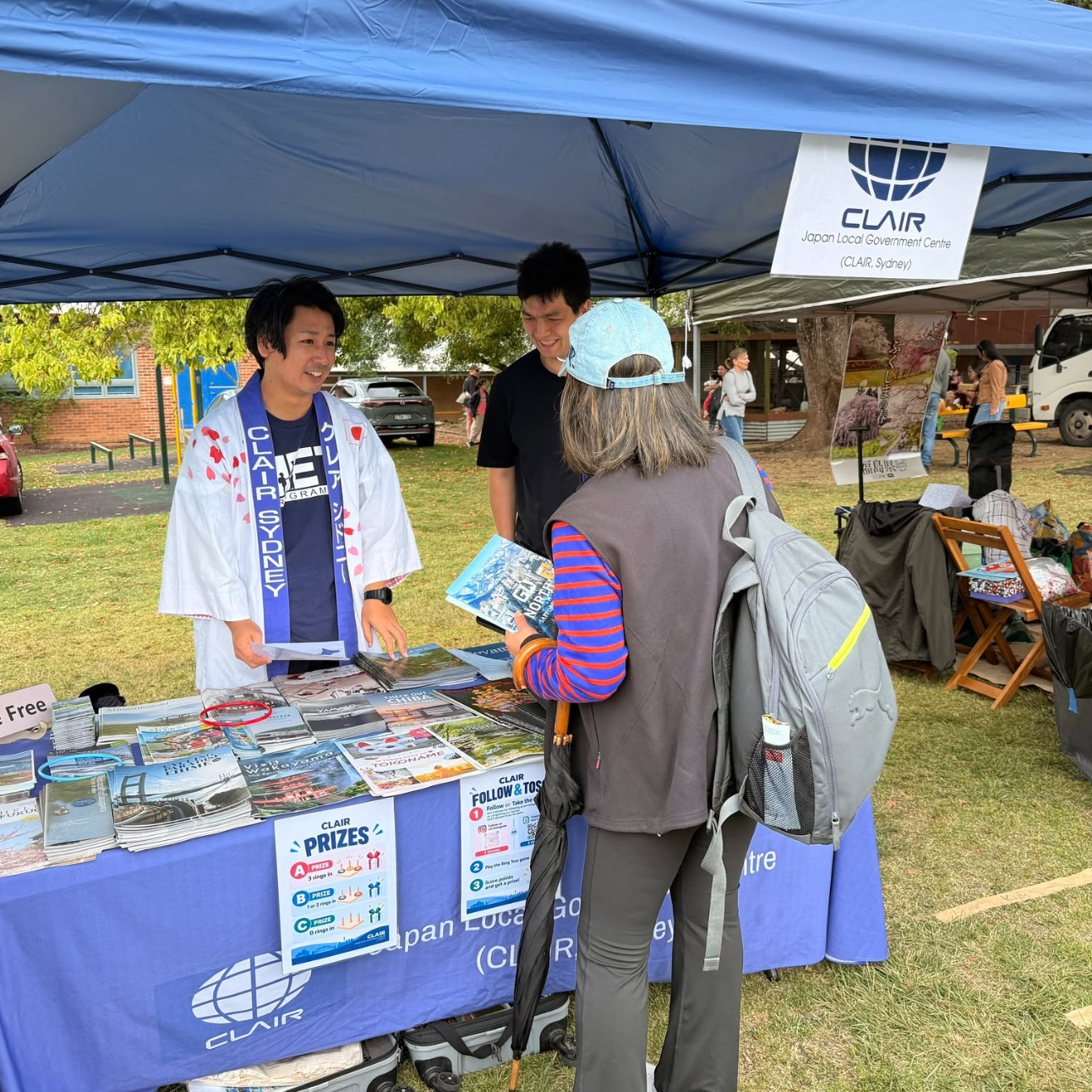
  • Located in the heart of Japan, Nagano Prefecture is known for its majestic mountains, rich natural environment, and distinctive local products, including apples, sake, and other regional specialties. In recent years, the prefecture has been expanding its international outreach by promoting its food, beverages, tourism, and cultural appeal to overseas audiences.

    As part of these efforts, Nagano Prefecture recently made its first appearance at the Perth Japan Festival and also hosted a special “Nagano Night” event in the city. The following contribution from Nagano Prefecture introduces these initiatives and shares the prefecture’s own observations on Western Australia, including the local business environment, community response, and opportunities for further engagement with Australia. 


    Nagano Prefecture Makes Its Debut at the Perth Japan Festival

     Nagano Prefecture made its first-ever appearance at the Perth Japan Festival, Western Australia’s largest Japanese cultural event. This year’s participation was delivered in collaboration with Japan’s Ministry of Foreign Affairs as part of the 50th anniversary celebrations of Australia–Japan friendship.

    Set in a vast outdoor park in the heart of the city, the festival featured a temporary shrine and a traditional Bon Odori tower, creating an authentic Japanese atmosphere. Attendance reached a record high of approximately 27,000 visitors. Products brought over from Nagano, including apple juice and seasoned rice mixes infused with shichimi spice, sold out in no time.

    Western Australia spans an area seven times the size of Japan yet is home to just 3.06 million people. Its capital, Perth, located on the state’s western edge, is widely recognized as one of the world’s most liveable cities. Driven by abundant natural resources such as iron ore and LNG, the region boasts the highest per capita GDP in Australia. The population has a relatively high proportion of residents of European descent, and the area has attracted migrants from a variety of backgrounds in recent years.

    As of 2025, the Japanese resident population stands at 8,614. In addition, Japan’s Mitsubishi Heavy Industries has secured a contract for 11 Mogami-class frigates. While the first three vessels will be built in Japan, the remaining ships are scheduled for construction in Henderson, near Perth.

    Looking ahead, several major Japan-related projects are lined up across Western Australia. These include one of the world’s largest hydrogen and ammonia initiatives led by Kawasaki Heavy Industries in partnership with Wood Energy, as well as plans for a nuclear-powered submarine base that may host visits from Japan’s Self-Defense Forces.

    However, Perth faces a growing challenge in housing supply. Demand continues to outstrip availability, pushing prices steadily upward. Despite interest rates exceeding 6%, many investors are purchasing properties outright in cash, prompting the state government to consider regulatory measures.

    One common observation among Japanese expatriates is the limited number of Japanese restaurants. Unlike Sydney and Melbourne on the east coast, where Japanese cuisine has firmly taken off, Perth is still catching up. That said, UDON noodle restaurants in the city are gaining popularity, often attracting long queues.

    Interestingly, the coastline around Perth is rich in marine life. Sea urchins and abalone are found in abundance, while fish such as snapper and horse mackerel can reportedly be caught in large numbers, even without bait. For many Japanese residents, heading out for an evening fishing trip to catch dinner has become part of daily life. Western Australia truly offers a bounty from the sea.


    Nagano Night in Perth

     Alongside the daytime Japan Festival, a two-night “Nagano Night” event was held at a Japanese restaurant in the city. Tickets, priced at over $85, sold out on the very same day.

    Guests were treated to a full-course Japanese dining experience showcasing premium ingredients from Nagano, paired with Nagano-produced apple juice, sake, and beer, an evening that truly captured the region’s flavors.  

    Highlights included English-language presentations by participating businesses from Nagano, along with a stunning 4K screening of promotional videos produced by the prefecture. The response was overwhelmingly positive, with many guests commenting on how genuinely moving and memorable the experience was. 

    We look forward to seeing the ties between Nagano Prefecture and Australia continue to grow even stronger.     

    Komei KONDO   Chief International Strategies Officer Nagano Prefecture Government      

    📒✐Learn more about Nagano Prefecture:

    ▪Official Nagano promotional video:
      https://nagano-brand.net/en/

    ▪Highlights from “Nagano Night in Perth”:
      https://www.instagram.com/reel/DWEUmzhETMt/?igsh=MWs4dHk3dGFoeHZzeA==


  • No account of the history of nature conservation in Japan would be complete without mentioning the Japanese Crested Ibis, known as the toki in Japanese. It is widely regarded as one of Japan’s most symbolic birds, and its scientific name is Nipponia nippon.

    The toki is a large waterbird measuring about 80 centimetres in length with a wingspan exceeding 130 centimetres.
    Its plumage is mostly white in colour, and its appearance is somewhat reminiscent of the Australian White Ibis, a familiar sight in many Australian cities. The toki’s wings and tail feathers have a delicate pinkish hue, and watching it soar through the sky is truly a beautiful sight.

    Historically, the species was found across Japan, China, the Korean Peninsula, and Taiwan. In Japan, the toki once widely inhabited rural areas, wetlands, and other natural environments.
    However, from the late nineteenth century to the twentieth century, its population declined rapidly due to overhunting for its feathers, agricultural expansion, and a reduction in food   sources caused by the widespread use of pesticides.

    The habitats that once supported the toki were rich natural environments shared not only by the toki itself but also by a wide variety of other species.
    For this reason, efforts to protect and breed the toki are still important not only from the perspective of conserving biodiversity, but also in terms of restoring the rich natural environments that once existed throughout Japan. Against this backdrop, Japan began full-scale conservation efforts for the toki around 1970.

    A significant development came in 1981, when seven wild toki, previously believed to be extinct, were discovered in China. Conservation and breeding efforts soon began there as well, and in 1999, China presented Japan with a breeding pair of toki, which produced Japan’s first captive-bred chick.

    Despite these efforts, the last wild-born toki in Japan died in 2003, marking the extinction of the country’s wild population.

    However, Japan subsequently established successful captive-breeding techniques and the species also began breeding successfully in the wild in Sado, the last refuge of the species in Japan before its extinction in the wild. Today, the wild population has recovered to an estimated 500 or more individuals, and the toki can once again be seen flying freely, particularly over Sado.

    Until recently, captive-bred toki had been released only in Sado. However, because the long-term survival of the species in Japan depends on having populations distributed across multiple regions rather than concentrated in a single area, release efforts have now been extended beyond Sado.

    In May 2026, the first release of the toki outside Sado took place in the Noto region of Ishikawa Prefecture. Noto was the last place on the Japanese mainland where the toki survived in the wild until 1970. More than half a century later, many people in Japan have been deeply moved to see the toki flying once again over Noto.

    Once lost from Japan’s skies, Nipponia nippon now flies there again, its beautiful, pink-tinted feathers catching the light. The return of a species once extinct in the wild stands as a testament to decades of dedicated conservation efforts. It also reminds us of the importance of preserving a world in which people and nature can coexist in harmony for future generations to come.


    Photo sources:
     Ministry of the Environment, Japan
     Ishikawa Prefectural Government

  • オーストラリア・ニュージーランドの各在外公館で開催されている新規JETプログラム参加者に対するオリエンテーションに参加しました。
    ▼JETプログラム概要(JETプログラムホームページ)
     
     
    オリエンテーションでは、在外公館の担当者から、渡航時や日本で働く際の注意事項などの説明があったほか、JETAA(元JET参加者の会)による経験者としてのアドバイスや質疑応答が実施されました。
    クレアシドニー事務所からは、JETプログラムにおけるクレアの役割やJET参加者を対象とした研修、クレアによるサポート体制などを説明しました。


    新規JETの皆さんは、7月下旬から8月上旬にかけて、日本に旅立たれます。JET在任期間中に、日本国内のそれぞれの任地でさまざまな経験を積み、見識を広げていただくとともに、日本の人々との草の根の交流を通じて、日本とオーストラリア・ニュージーランドをつなぐ懸け橋として活躍していただくことを期待しています。日本で充実した素敵な時間を過ごされますよう、願っています。