※コラムは英語版のみです。
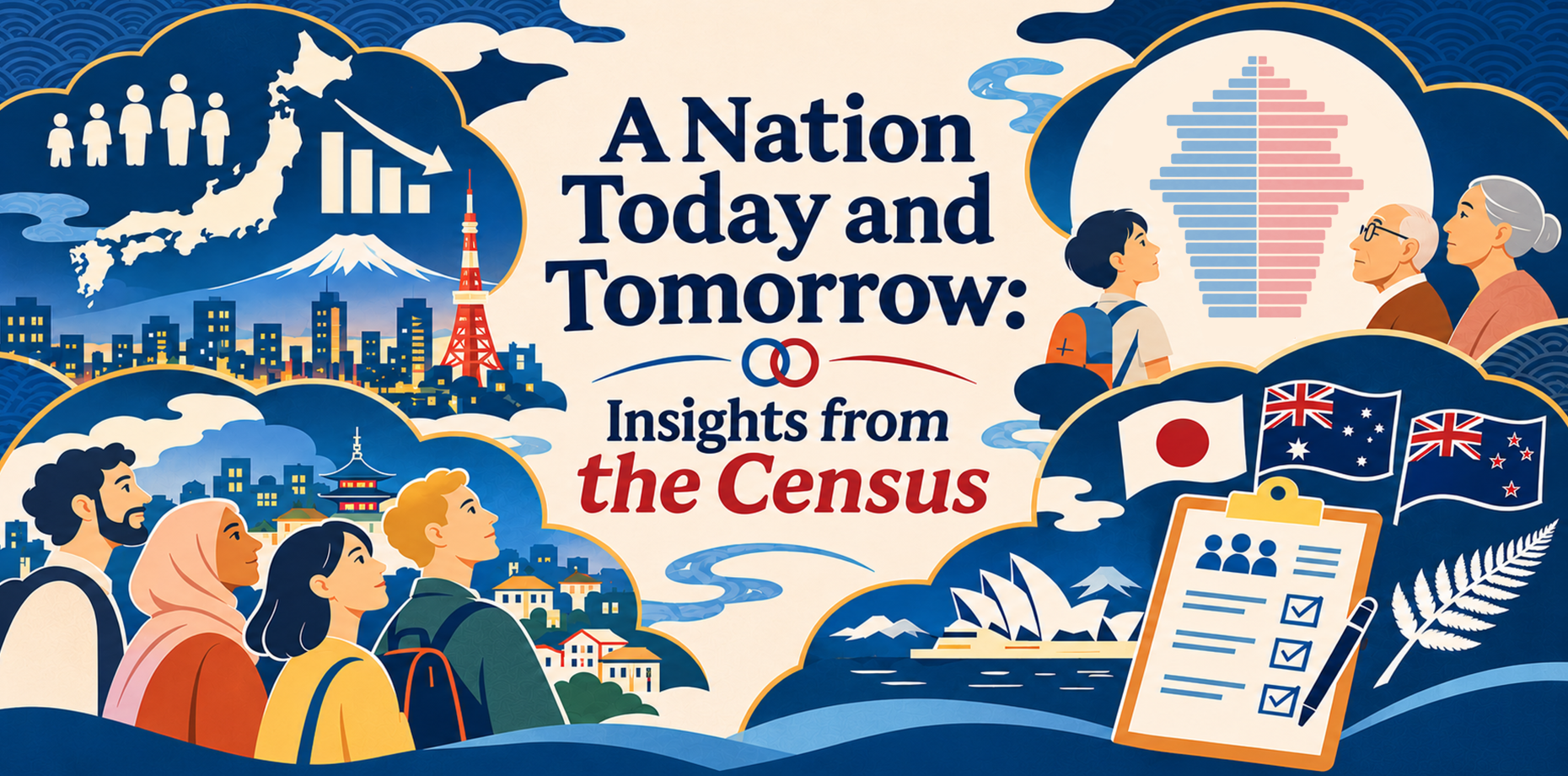
Like Australia and New Zealand, Japan conducts a national census once every five years. The most recent census was carried out in October 2025, and the results relating to population, age structure, nationality, and other key demographic indicators were released at the end of September 2026.
In this article, I would like to provide an overview of the results and explore the differences between Japan’s census and those conducted in Australia and New Zealand.
Overview of Japan’s 2025 Census Results
1) Continued Population Decline and Greater Concentration in Tokyo
As of 1 October 2025, Japan’s total population stood at approximately 122.97 million, marking the third consecutive census to record a population decline, following those in 2015 and 2020.
Looking across Japan’s 47 prefectures (regional administrative divisions comparable to states or provinces), Tokyo was the only one to record population growth, while the remaining 46 experienced a decline.
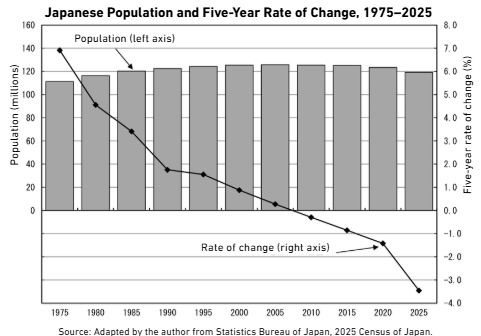
Tokyo, the country’s most populous prefecture, had approximately 14.24 million residents, accounting for 11.6% of Japan’s total population. The Greater Tokyo Area, consisting of Tokyo and the neighbouring prefectures of Kanagawa, Saitama and Chiba, was home to 30.1% of the nation’s population, reflecting the concentration of people in and around the capital.
2) Japan’s Population Continues to Age as Births Decline
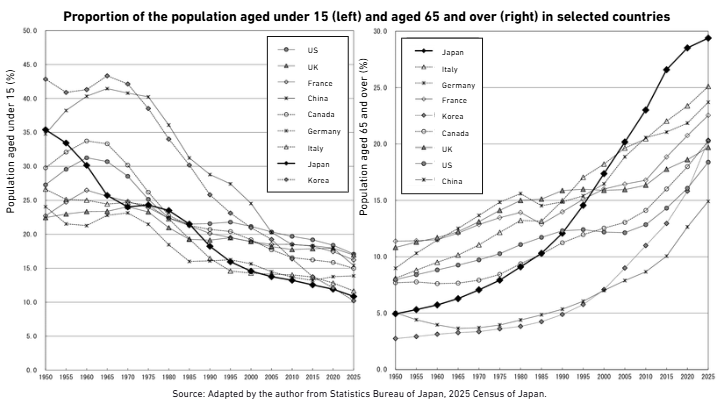
In terms of the population’s age structure, the proportion of people aged 65 and over increased from 28.5% in 2020 to 29.4% in 2025. In contrast, the proportion of children under the age of 15 declined from 11.9% to 10.9% over the same period.
Compared with the other G7 countries as well as China and South Korea, Japan had the highest proportion of people aged 65 and over. It also recorded the second-lowest proportion of children under 15, after South Korea (10.2%). These figures once again reaffirm that Japan’s ageing population and low birth rates are particularly pronounced compared with those of other countries.
3) Record-High Foreign Resident Population
Looking at Japan’s population by nationality, Japanese citizens accounted for 96.9% of the total population, while foreign residents made up the remaining 3.1%.
Although the proportion of foreign residents remained low compared with Australia and New Zealand, their number reached a record high of approximately 3.84 million in the 2025 census, an increase of around 1.09 million from 2020.
This represented an average annual growth rate of 6.93%. These findings suggest that foreign residents are becoming an increasingly significant part of Japan’s population as the country’s overall population continues to decline.
4) Summary
Unlike Australia and New Zealand, where populations continue to grow, Japan entered a period of population decline after peaking in 2008.
As one of the first countries to experience population decline, low birth rates and an ageing population on a significant scale, Japan must address a growing number of challenges that other countries may encounter in the future. These include a shrinking workforce, rising social security costs, staff shortages in healthcare and aged-care, and difficulties maintaining public transport and essential services in regional areas.
What Census Questions Reveal About a Nation’s Priorities
The census questionnaires used in Japan, Australia and New Zealand share many similarities. All three countries collect information on name, age, sex at birth (or simply sex in Japan), household composition, marital status, current and previous places of residence, employment status, occupation and workplace location. Together, these questions provide insight into the composition of each country’s population, migration patterns and labour market characteristics.
At the same time, there are notable differences. In Australia and New Zealand, census questionnaires include questions about country of birth, religion, languages spoken at home, gender identity and sexual orientation. Australia also collects information on parents’ countries of birth, ancestry and English-language proficiency, while New Zealand gathers information on ethnicity. These topics are not covered by Japan’s census.
These differences highlight a distinct emphasis in each country’s census approach. While Japan’s census primarily seeks to understand population structure and patterns of residence and employment, including who people are, where they live, how they move and how they work, the censuses conducted in Australia and New Zealand also place emphasis on capturing the cultural, linguistic and ethnic diversity of their populations.
The Census: Reflecting the Society of Today and Tomorrow
A census is more than a statistical exercise for counting people. By capturing information on population change, age structure, place of residence and cultural background, it serves as a mirror reflecting broader social change.
Although each country conducts a census, what it asks and the information it collects vary according to their respective priorities and policy needs. By comparing not only census results but also the questions that are asked, we can gain insights into each country’s current circumstances as well as the kind of society it seeks to build and the challenges it considers most important for the future.
Like Australia and New Zealand, Japan conducts a national census once every five years. The most recent census was carried out in October 2025, and the results relating to population, age structure, nationality, and other key demographic indicators were released at the end of September 2026.
In this article, I would like to provide an overview of the results and explore the differences between Japan’s census and those conducted in Australia and New Zealand.
Overview of Japan’s 2025 Census Results
1) Continued Population Decline and Greater Concentration in Tokyo
As of 1 October 2025, Japan’s total population stood at approximately 122.97 million, marking the third consecutive census to record a population decline, following those in 2015 and 2020.
Looking across Japan’s 47 prefectures (regional administrative divisions comparable to states or provinces), Tokyo was the only one to record population growth, while the remaining 46 experienced a decline.
Tokyo, the country’s most populous prefecture, had approximately 14.24 million residents, accounting for 11.6% of Japan’s total population. The Greater Tokyo Area, consisting of Tokyo and the neighbouring prefectures of Kanagawa, Saitama and Chiba, was home to 30.1% of the nation’s population, reflecting the concentration of people in and around the capital.
2) Japan’s Population Continues to Age as Births Decline
In terms of the population’s age structure, the proportion of people aged 65 and over increased from 28.5% in 2020 to 29.4% in 2025. In contrast, the proportion of children under the age of 15 declined from 11.9% to 10.9% over the same period.
Compared with the other G7 countries as well as China and South Korea, Japan had the highest proportion of people aged 65 and over. It also recorded the second-lowest proportion of children under 15, after South Korea (10.2%). These figures once again reaffirm that Japan’s ageing population and low birth rates are particularly pronounced compared with those of other countries.
3) Record-High Foreign Resident Population
Looking at Japan’s population by nationality, Japanese citizens accounted for 96.9% of the total population, while foreign residents made up the remaining 3.1%.
Although the proportion of foreign residents remained low compared with Australia and New Zealand, their number reached a record high of approximately 3.84 million in the 2025 census, an increase of around 1.09 million from 2020.
This represented an average annual growth rate of 6.93%. These findings suggest that foreign residents are becoming an increasingly significant part of Japan’s population as the country’s overall population continues to decline.
Summary
Unlike Australia and New Zealand, where populations continue to grow, Japan entered a period of population decline after peaking in 2008.
As one of the first countries to experience population decline, low birth rates and an ageing population on a significant scale, Japan must address a growing number of challenges that other countries may encounter in the future. These include a shrinking workforce, rising social security costs, staff shortages in healthcare and aged-care, and difficulties maintaining public transport and essential services in regional areas.
What Census Questions Reveal About a Nation’s Priorities
The census questionnaires used in Japan, Australia and New Zealand share many similarities. All three countries collect information on name, age, sex at birth (or simply sex in Japan), household composition, marital status, current and previous places of residence, employment status, occupation and workplace location. Together, these questions provide insight into the composition of each country’s population, migration patterns and labour market characteristics.
At the same time, there are notable differences. In Australia and New Zealand, census questionnaires include questions about country of birth, religion, languages spoken at home, gender identity and sexual orientation. Australia also collects information on parents’ countries of birth, ancestry and English-language proficiency, while New Zealand gathers information on ethnicity. These topics are not covered by Japan’s census.
These differences highlight a distinct emphasis in each country’s census approach. While Japan’s census primarily seeks to understand population structure and patterns of residence and employment, including who people are, where they live, how they move and how they work, the censuses conducted in Australia and New Zealand also place emphasis on capturing the cultural, linguistic and ethnic diversity of their populations.
The Census: Reflecting the Society of Today and Tomorrow
A census is more than a statistical exercise for counting people. By capturing information on population change, age structure, place of residence and cultural background, it serves as a mirror reflecting broader social change.
Although each country conducts a census, what it asks and the information it collects vary according to their respective priorities and policy needs. By comparing not only census results but also the questions that are asked, we can gain insights into each country’s current circumstances as well as the kind of society it seeks to build and the challenges it considers most important for the future.