Welcome to Tomakomai City

Commemorative Events for the 45th Anniversary of the Sister City Relationship between Tomakomai City and Napier City

On 20 November 2025, a cultural welcome ceremony and gala dinner party were held to mark the 45th anniversary of the sister-city relationship between Tomakomai City, Hokkaido, Japan, and Napier City, New Zealand.

The official visit program is conducted every five years; however, the 40th-anniversary program was cancelled due to the COVID-19 pandemic. As a result, this visit marked the first occasion in ten years that a delegation from Tomakomai travelled to Napier.

The primary objectives of this visit were to promote cultural exchange between the Māori people of New Zealand and the Ainu people of Hokkaido, as well as encourage economic exchange amongst business stakeholders, with the aim of rebuilding connections that have weakened over time.

Cultural Welcome Ceremony

At 9:00 a.m. on 20 November, the Tomakomai delegation participated in a pōwhiri, a traditional Māori welcoming ceremony, at Waiohiki Marae.

Upon arrival at the venue, the delegation was welcomed by the Mayor of Napier, Richard McGrath, who exchanged greetings and handshakes with Mayor Kanazawa of Tomakomai and other members of the delegation. During the ceremony, Māori representatives from the marae and local children, performed a haka, followed by formal speeches known as whaikōrero, delivered in te reo Māori.

At the conclusion of the ceremony, participants exchanged hongi, a traditional greeting involving the gentle touching of noses, along with hugs, creating a warm and friendly atmosphere that reflected mutual respect and openness.

Following the ceremony, an introduction to Māori culture and history was provided by representatives of Napier, offering the Tomakomai delegation a valuable opportunity to deepen their understanding of local cultural traditions.

Gala Dinner Party
       

The commemorative ceremony was attended by the Tomakomai delegation, consisting mainly of local government representatives, Ainu-related organisations, and business leaders, alongside members of the Napier City Council. Representatives from Pan Pac Forest Products Ltd (a joint venture between Oji Paper and a local timber company in Napier, which marked the beginning of this exchange), Oji Holdings Corporation, the Embassy of Japan in New Zealand and the CLAIR Sydney office were also in attendance.

The program included speeches by representatives from both cities, an exchange of commemorative gifts, and cultural performances by members of the Ainu community, making the event both meaningful and diverse in content.

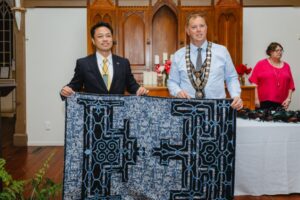
During the gift exchange, Napier City presented Tomakomai City with a wall hanging made from native New Zealand plants, while Tomakomai City presented Napier City with a tapestry featuring traditional Ainu motifs.

In his address, the Mayor of Tomakomai expressed a strong desire to further develop exchanges between the two cities in preparation for the 50th anniversary in five years’ time. He also conveyed expectations were expressed for expanded cooperation across a range of fields, including cultural, economic, and educational exchanges.

At the conclusion of the ceremony, all participants from Japan performed the song Ue o Muite Arukō (internationally known as Sukiyaki). The performance fostered a strong sense of unity and mutual respect, leaving the venue filled with an atmosphere of cultural appreciation and shared goodwill.

Tomakomai City and Napier City plan to continue regular communication in order to further strengthen their relationship. In addition to online interactions, the resumption of youth-focused exchanges, such as student exchange programs, is currently under consideration. The continued development of exchange between the two cities is highly anticipated.
Posted in Discover Japan, Uncategorised

Uncategorised

  •  On 1 June, we joined Burwood Council for a study session. These sessions have been held annually since 2024, making this the third exchange between our organisations.
     
    Representatives from the JLGC Sydney Office first introduced a project being implemented in Hokuto City, Yamanashi Prefecture, which is the home municipality of one of our Assistant Executive Directors. Under this project, high school students collaborate with local businesses to develop specialty products. Burwood Council participants showed particular interest in how participating businesses are selected and were eager to learn more about this aspect of the project. We then introduced Japan’s local government mascots, commonly known as yuru-chara, which play an important role in enhancing regional recognition and brand value, as well as communicating government initiatives in an accessible and engaging way. The participating Assistant Executive Directors introduced mascots from their respective local governments and organisations and explained the characters’ backgrounds, roles and activities. In response, Burwood Council participants asked a range of questions, including how mascot designs are submitted and how the final designs are selected.


    Burwood Council then provided an overview of its future-oriented urban development initiatives. Located approximately 15 minutes by train from central Sydney, Burwood currently has a population of around 45,000, which is expected to double over the next decade. In anticipation of this growth, as well as the planned opening of a new metro station in 2032, the Council outlined its approach to promoting high-density urban development alongside the enhancement of high-quality public spaces. Specific initiatives include the development of a new cultural facility that will serve as a hub for arts and culture, the installation of public art, and measures to stimulate the night-time economy and create a vibrant urban environment. The Council also explained its efforts to incorporate community input into urban planning through advisory committees made up of local residents and online consultation platforms that enable broad public participation.


    Following the discussion, we joined Burwood Council staff on a site visit to observe projects aimed at enhancing public spaces through public art and promoting the night-time economy. With development and revitalisation projects underway across many parts of the city, we were able to gain valuable insights into Burwood’s ongoing urban transformation.
    We would like to express our sincere gratitude to everyone at Burwood Council for providing us with this valuable learning opportunity.
     
         
  •  


    ~Grand Prize – ¥500,000~
    SUBMISSIONS NOW OPEN for the 15th Annual Manga Kingdom Tottori International Comic Art Contest!
    (Deadline: August 31st)
    ━━━━━━━━━━━━━━━━━━━━━━━━
    The 15th edition of the Manga Kingdom Tottori International Comic Art Contest is now officially accepting entries – including the special ‘U-15 Youth Manga Artist Prize’ for entrants aged 15 and under. The contest is open to artists worldwide and submissions are accepted in any language!
    This year’s theme is ‘Clothing’.
    Entries will be accepted until Monday August 31st (JST).
    The Grand Prize winner will receive a cash prize of ¥500,000, and selected artists will be invited to Tottori Prefecture for the award ceremony. Winning works will be compiled into a professionally published collection. Don’t miss your chance to be part of this prestigious international celebration of comic art – get your entries in before the deadline!
  • The latest issue of our correspondence is released.

    View this correspondence in PDF.

  • Newsletter No.201

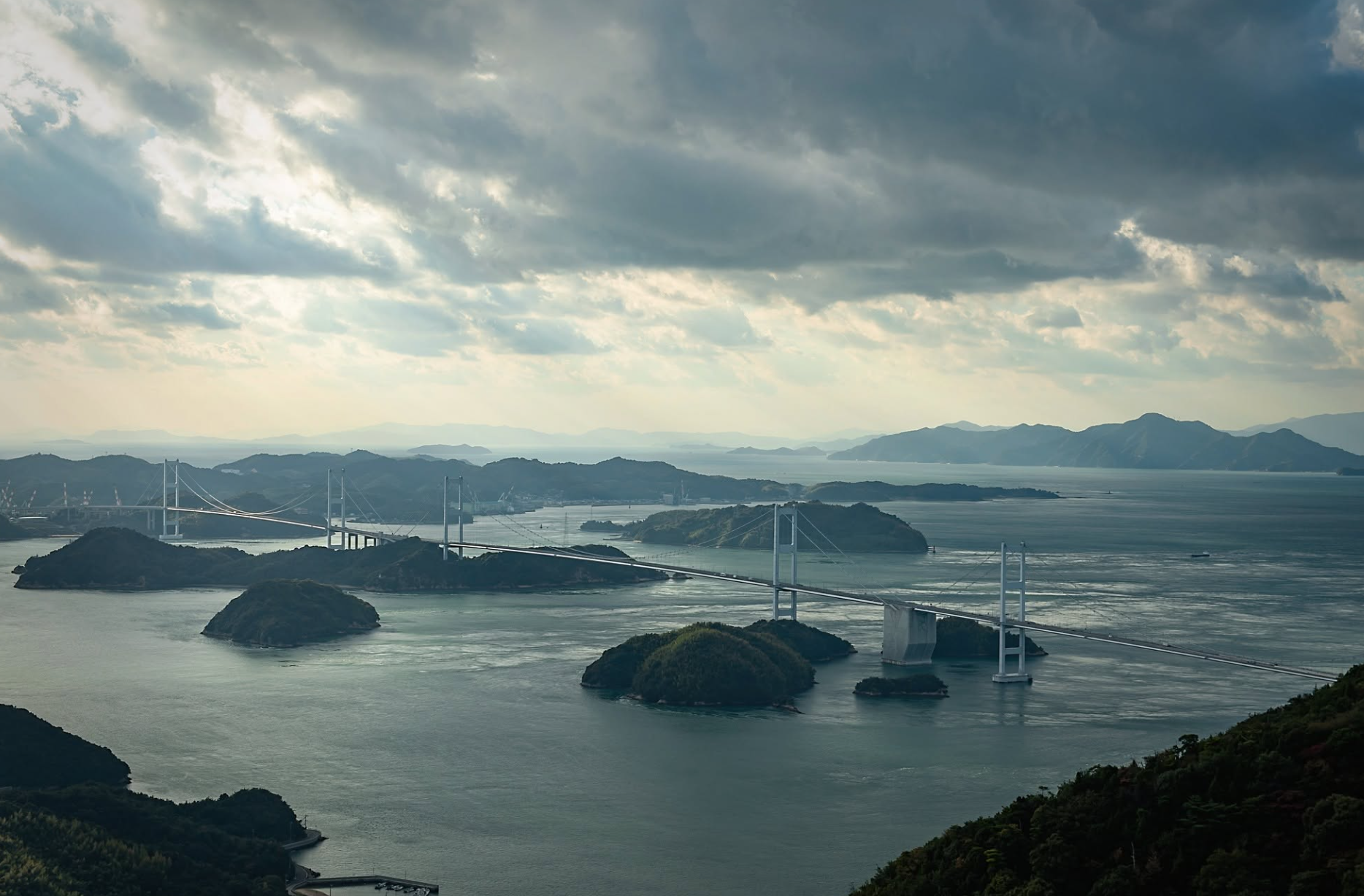
  • Ehime Prefecture is located along Japan’s Seto Inland Sea and is home to approximately 1.27 million people. It is known for its warm climate and outstanding scenic beauty, along with its long history of citrus cultivation. The prefecture is made up of many islands, with the unique landscape of the Seto Inland Sea spreading throughout. In recent years, Ehime has become increasingly popular as a tourist destination, welcoming many domestic and international visitors all year round.


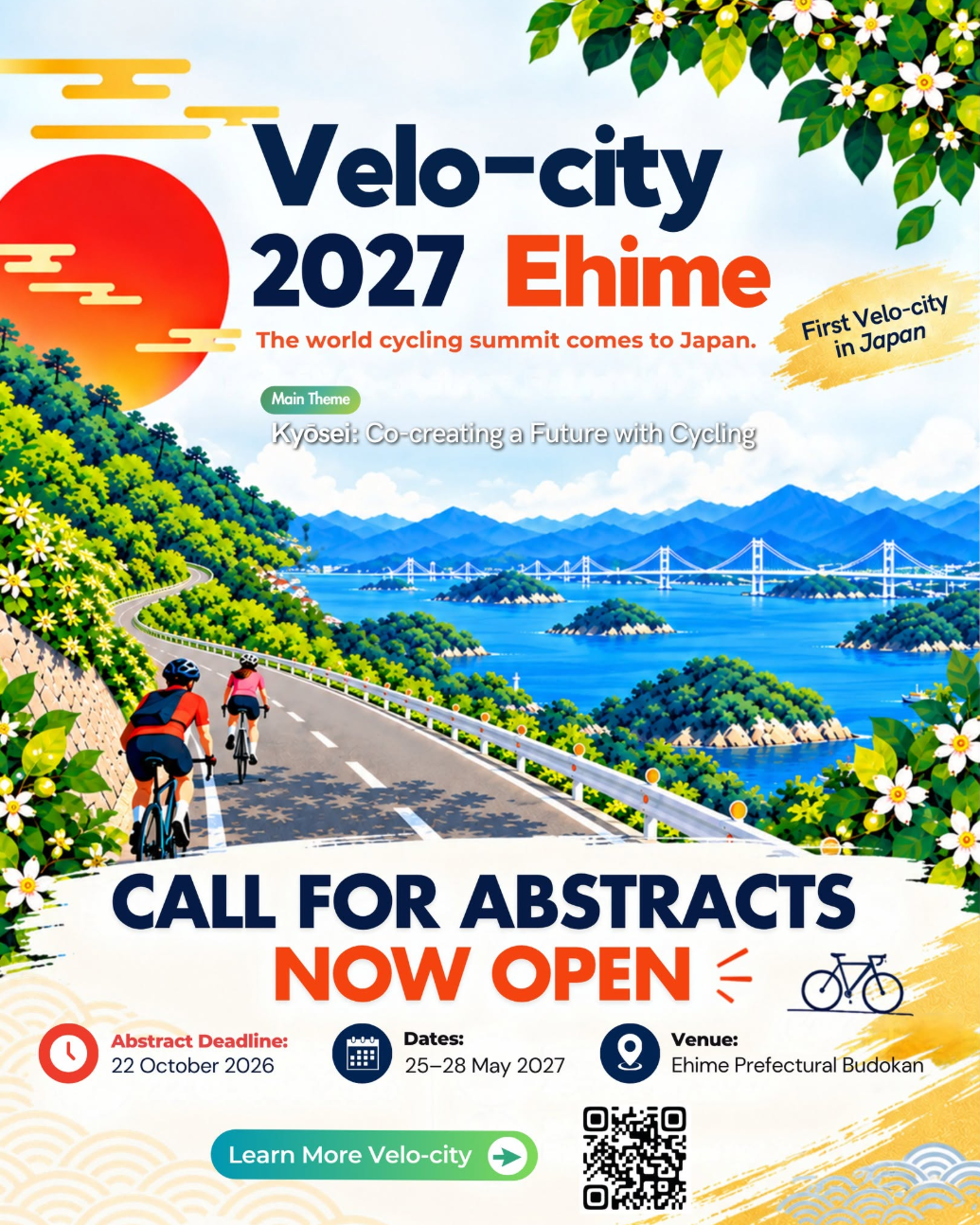
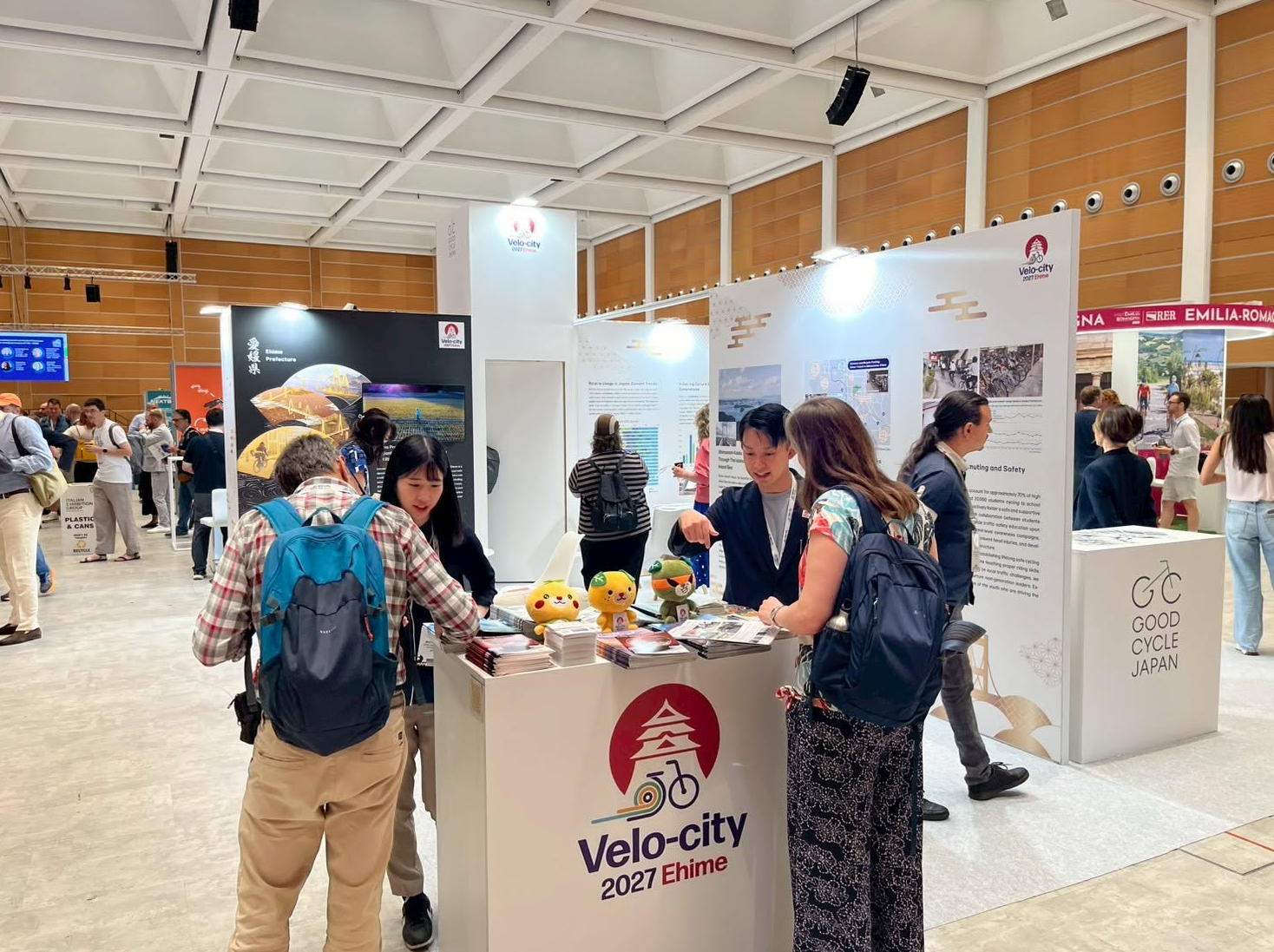
    In 2027, Ehime Prefecture will host “Velo-city,” an international bicycle conference, for the first time in Japan. Velo-city is one of the largest academic conferences, bringing bicycle companies, researchers, and experts together from around the world. While discussing various topics including tourism, safety, and urban planning, participants can enjoy the cityscape of Matsuyama through a bicycle parade and will also be able to visit other parts of the prefecture via ‘technical visits’ (explained below).


    In recent years, Ehime Prefecture has become one of the leading centers of bicycle culture in Japan. Many local residents begin riding bicycles at a very young age, and the majority of high school students commute to school by bike. Furthermore, the prefecture boasts Japan’s highest helmet-wearing rate, demonstrating strong safety awareness throughout the community. This well-established environment, which allows people of all ages to use bicycles safely on a daily basis, positions Ehime Prefecture as a  center of Japan’s bicycle culture.

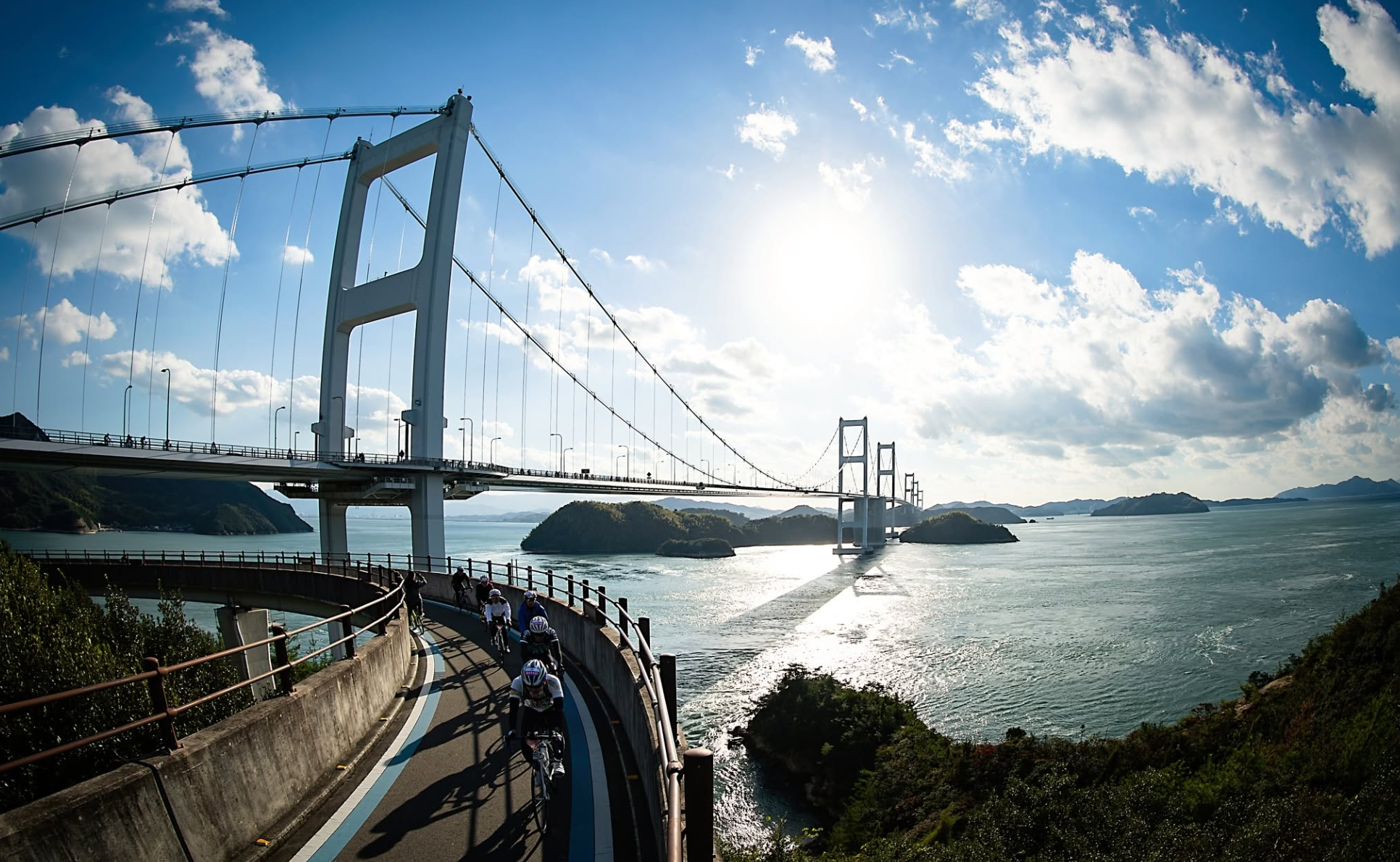
    Technical visits are guided tours that allow participants to explore various locations throughout the prefecture during Velo-city, featuring multiple courses with different themes. There is a course to learn about the infrastructure and scenery of the “Shimanami Kaido,” Japan’s representative maritime cycling route; a course to study safety education initiatives in schools by observing Japan’s typical morning school commute; and a course to experience the “Henro,” a pilgrimage to Buddhist temples, by bicycle. By participating in these technical visits and experiencing the local atmosphere, participants can gain valuable insights into the prefecture’s bicycle policies firsthand.


    On the second day (Wednesday, 26 May 2027), a spectacular bicycle parade will fill the city center. While showcasing the prefecture’s appeal as an international model bicycle city, the event will provide a chance for all participants to experience and share how bicycles act as a catalyst for regional revitalisation, bringing new possibilities for future urban space allocation, health, a sense of purpose in life, and friendship.

    During the four-day event, approximately 80 plenary breakout sessions will be held at the venue, with discussions centered around key themes and priorities. The conference program content will be determined by selecting proposals submitted during the abstract submission period, which begins in September. To encourage active exchange of diverse perspectives, Ehime welcomes a large number of submissions. Participants are invited to apply and help make this event a success.

  • Recently, I had the opportunity to attend an awards ceremony recognising outstanding achievement in Japanese-related studies, hosted by the Australia-Japan Society of NSW (AJS-NSW).

    On the day, certificates were presented to seven outstanding students nominated by seven universities[1] in the Greater Sydney region, and each recipient delivered a speech.

    All of the award recipients shared reflections along similar lines, such as: “Thanks to studying Japanese, I’ve had incredible experiences, like studying at a Japanese university through an exchange program and making friends from diverse backgrounds, that have truly changed my life.” Another common sentiment was: “Looking ahead, I hope to pursue a career related to Japan or possibly live there in the future, so I will continue to work hard to achieve these goals.”

    Learning and mastering a language other than one’s mother tongue is by no means an easy task. First and foremost, I would like to express my deep respect to the award recipients for their dedicated commitment to studying Japanese.

    I am also delighted that their language studies have sparked such a strong interest in Japan and a genuine desire to deepen their understanding. I was deeply impressed by their determination to maintain a connection with Japan long after graduation.

    On a personal note, I moved to Sydney last July, my first time living abroad, and I must admit that I still find speaking English challenging at times. However, seeing the dedication of the award recipients has inspired me to renew my own efforts. By conversing and connecting with others in English, I hope to further deepen my understanding of the local people, culture, and values in this region.

    [1] The seven universities were Macquarie University, The University of Newcastle, University of New England, University of Technology Sydney (UTS), The University of New South Wales (UNSW), The University of Sydney, and Western Sydney University.

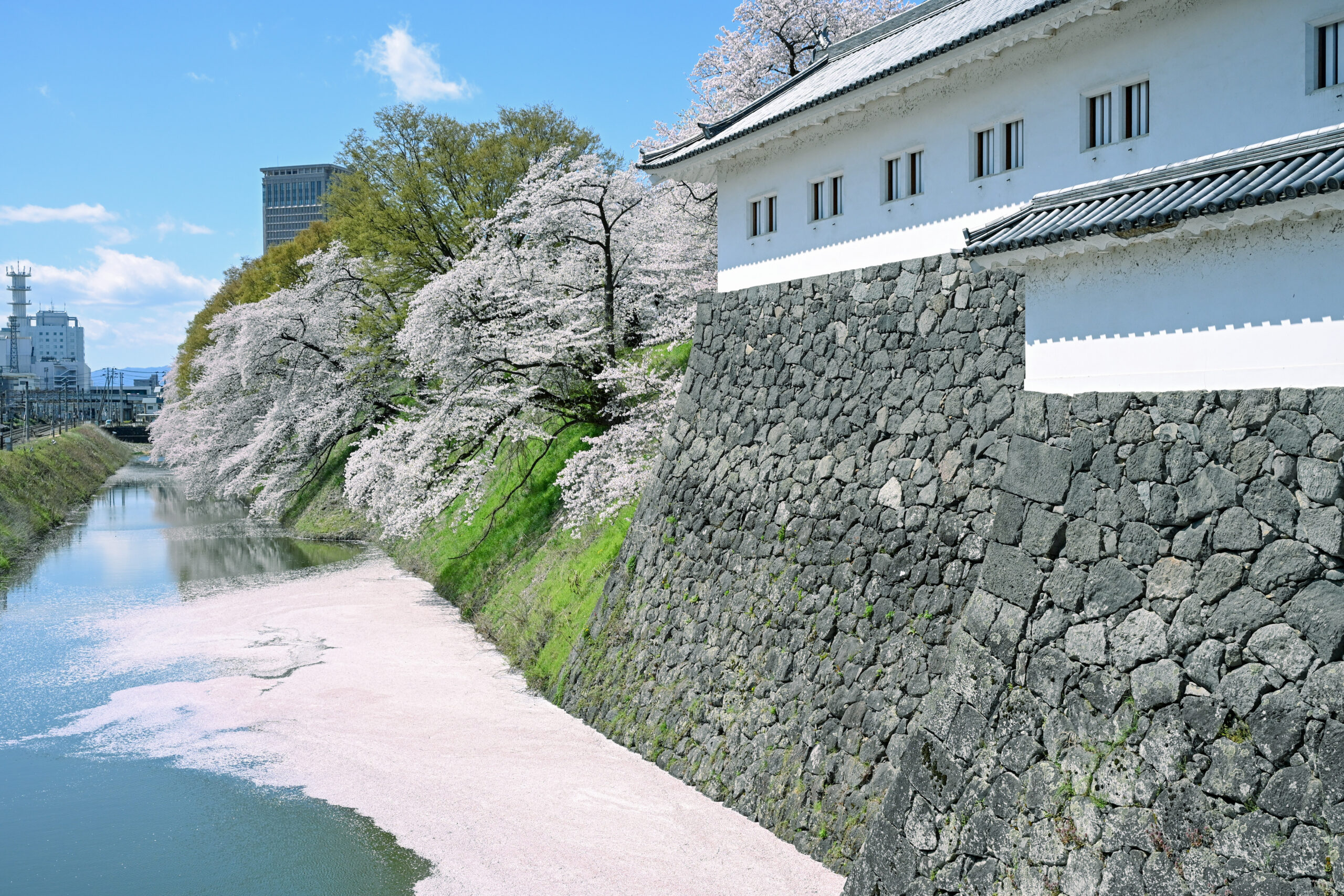
  •  On Thursday, 21 May, representatives from Yamagata City, who came to Australia to exhibit at the Snow Travel Expo held in Melbourne and Sydney, paid a visit to CLAIR Sydney Office.
    During their visit, we outlined the role of our office and provided an overview of Australia’s society and economy, as well as the current state of inbound tourism to Japan.
     
    This led to an engaging discussion on the differences in industry structure between Japan and Australia and recent trends in inbound tourism.


    CLAIR Sydney also supports a wide range of initiatives undertaken by Japanese local governments in Australia and New Zealand. If you require assistance with your activities, please feel free to contact us.
     
     
  •  On 24 May, the Japan Festival 2026 was held in the City of Whitehorse, located approximately 15 km east of Melbourne.
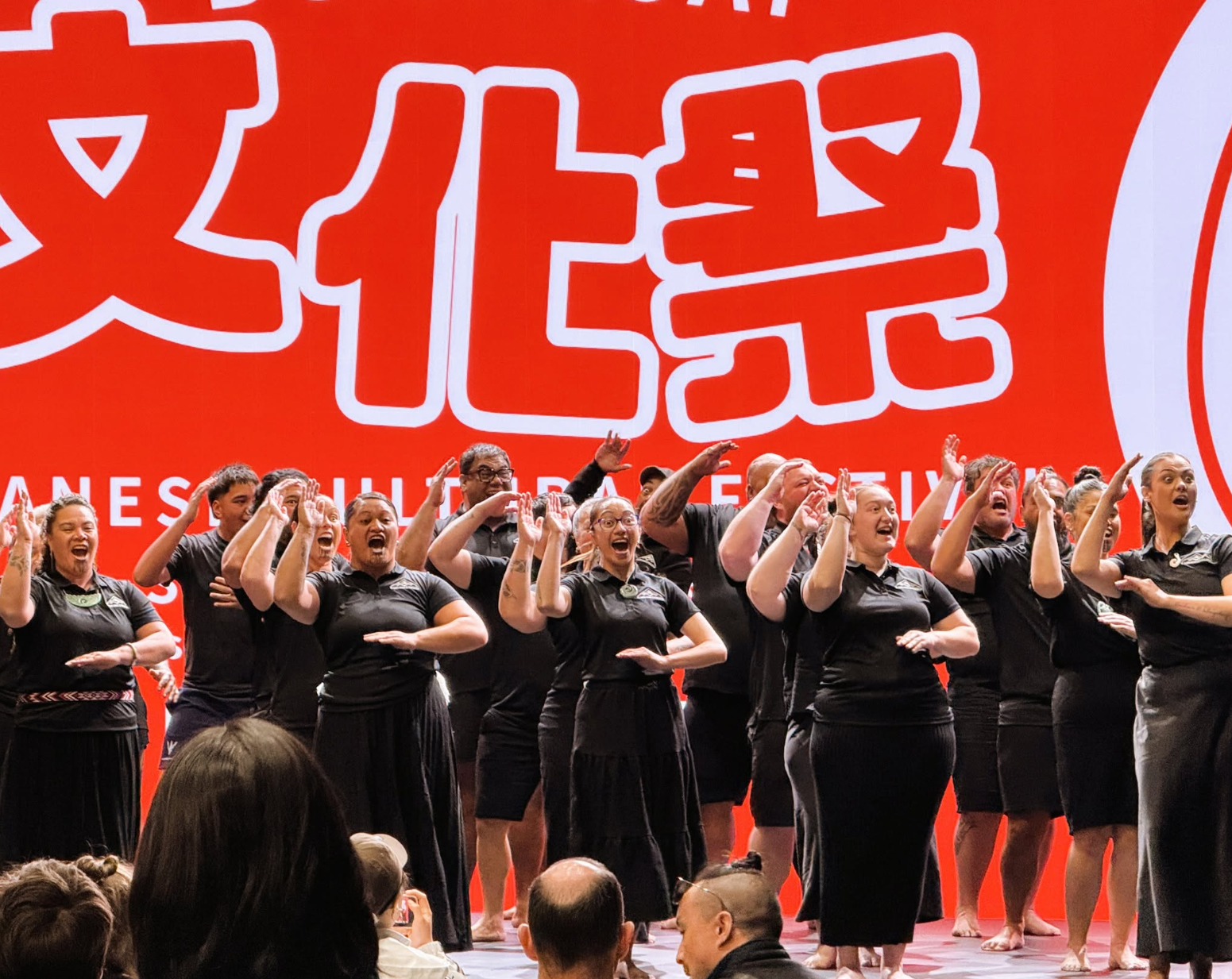
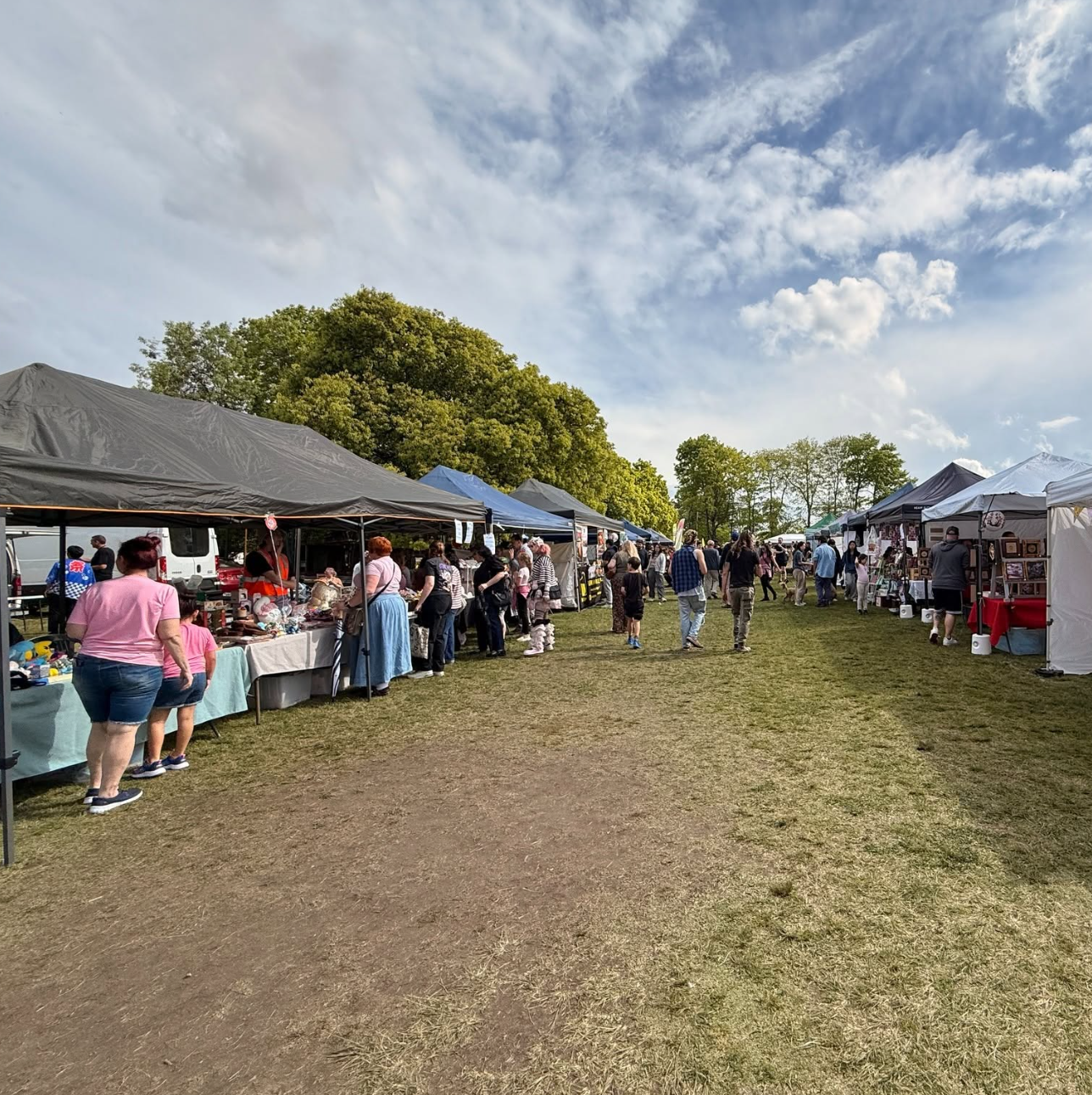
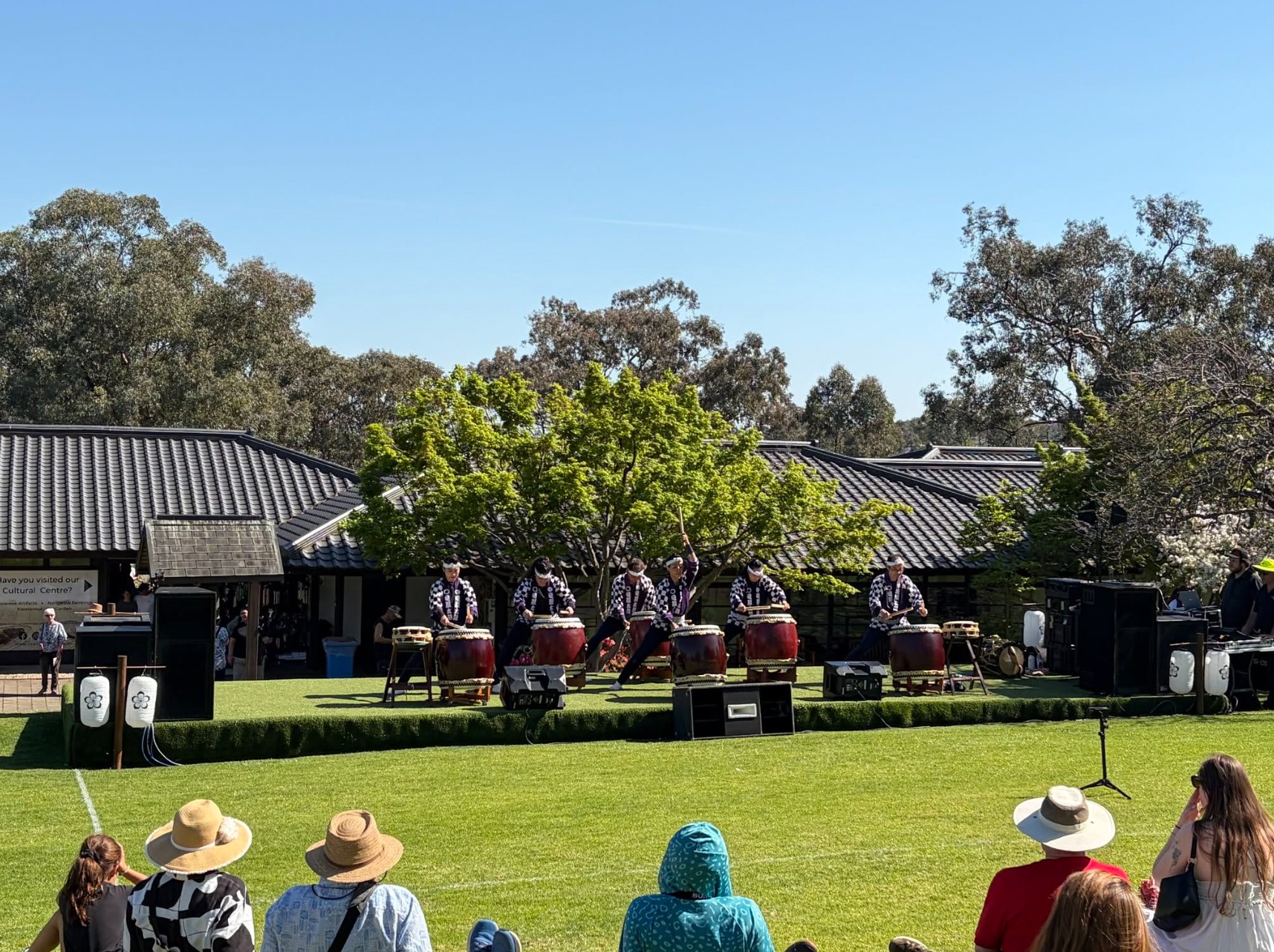
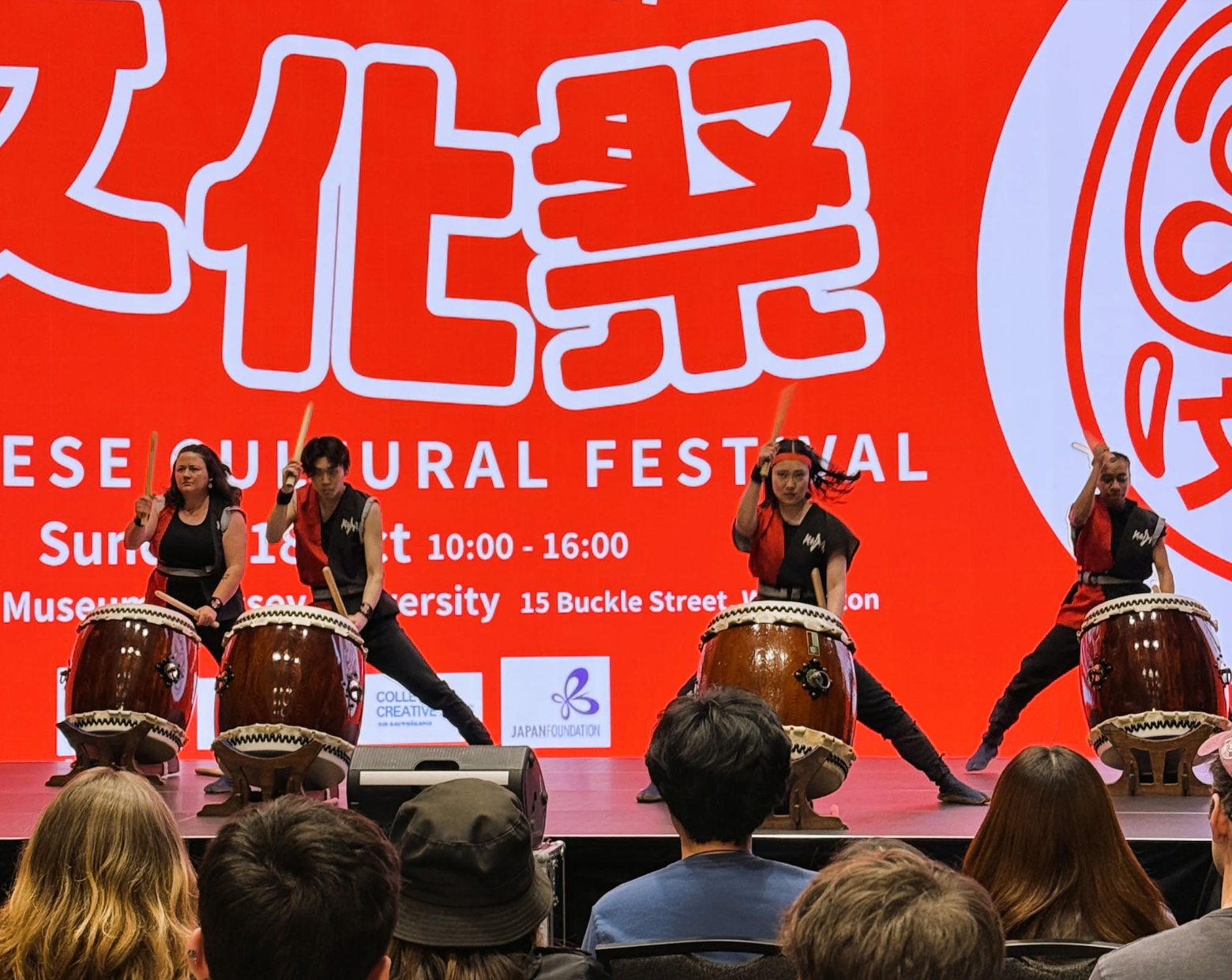
    Around 100 booths and stalls lined the venue, offering Japanese goods and crafts as well as Japanese cuisine such as sushi and okonomiyaki. Visitors could also enjoy cultural activities including origami and shogi (Japanese chess). There were also a variety of stage performances, including taiko drumming, the Soran Bushi folk dance, and Tsugaru shamisen music, as well as kimono and cosplay contests. According to the organisers, the festival attracted approximately 5,500 visitors.


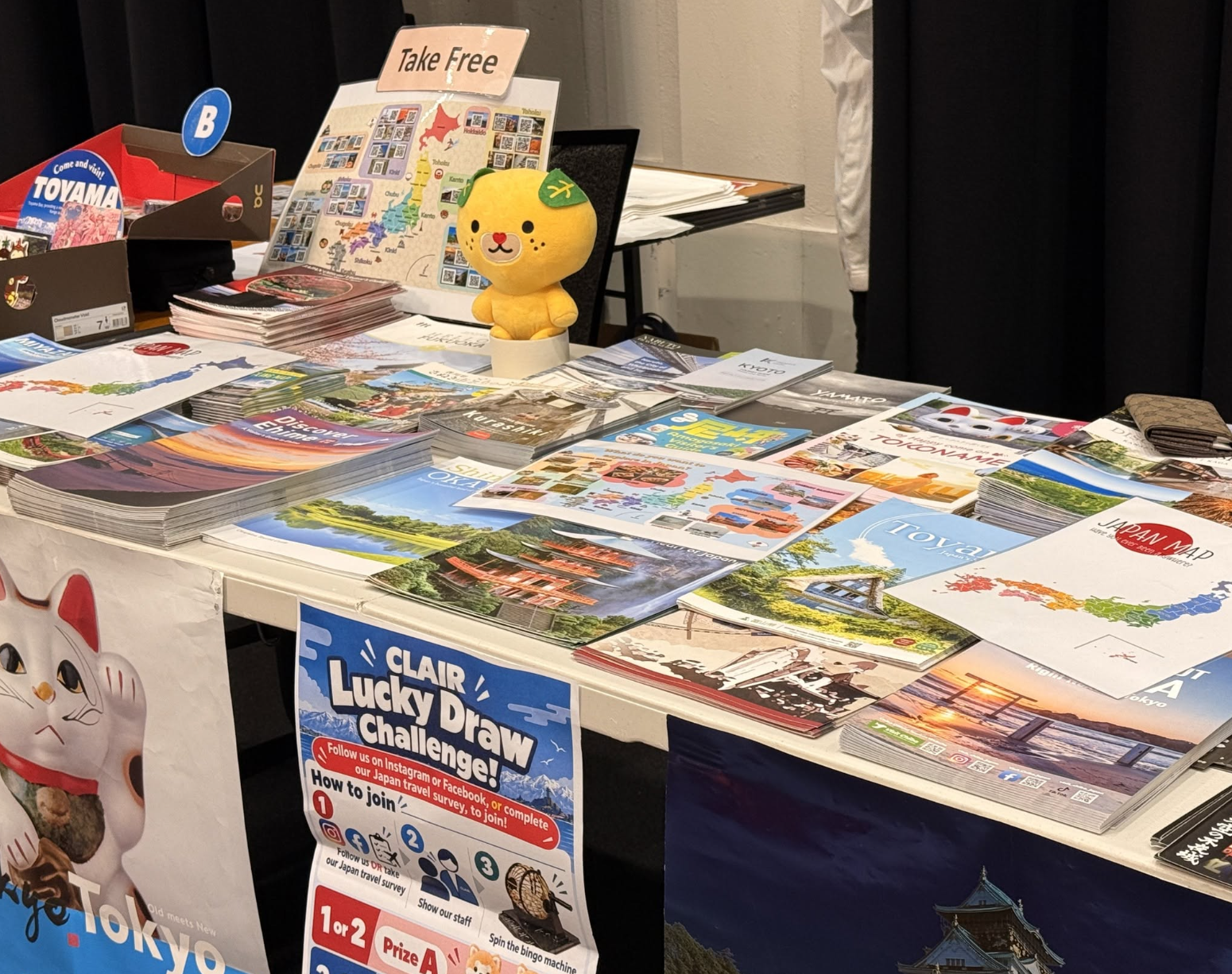
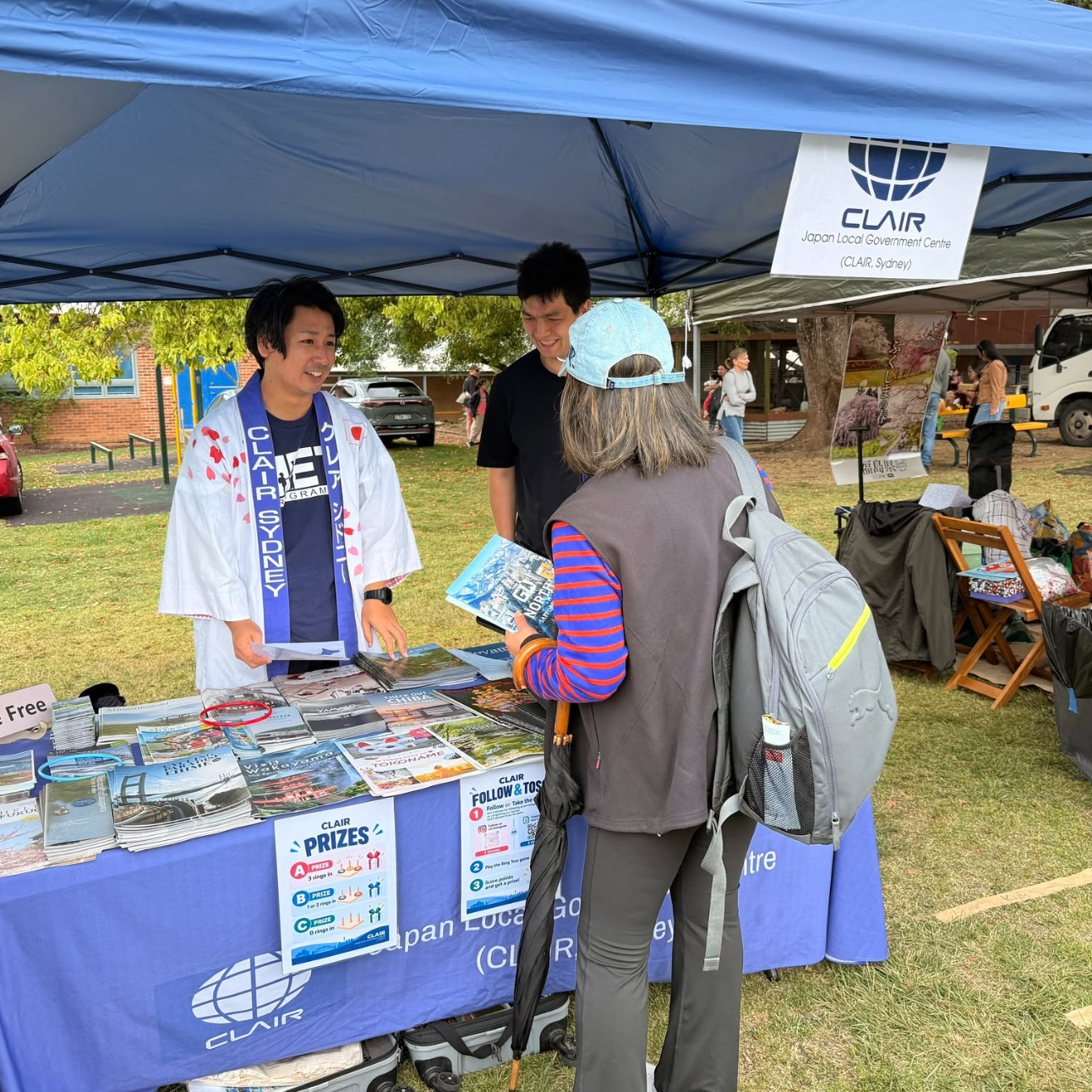
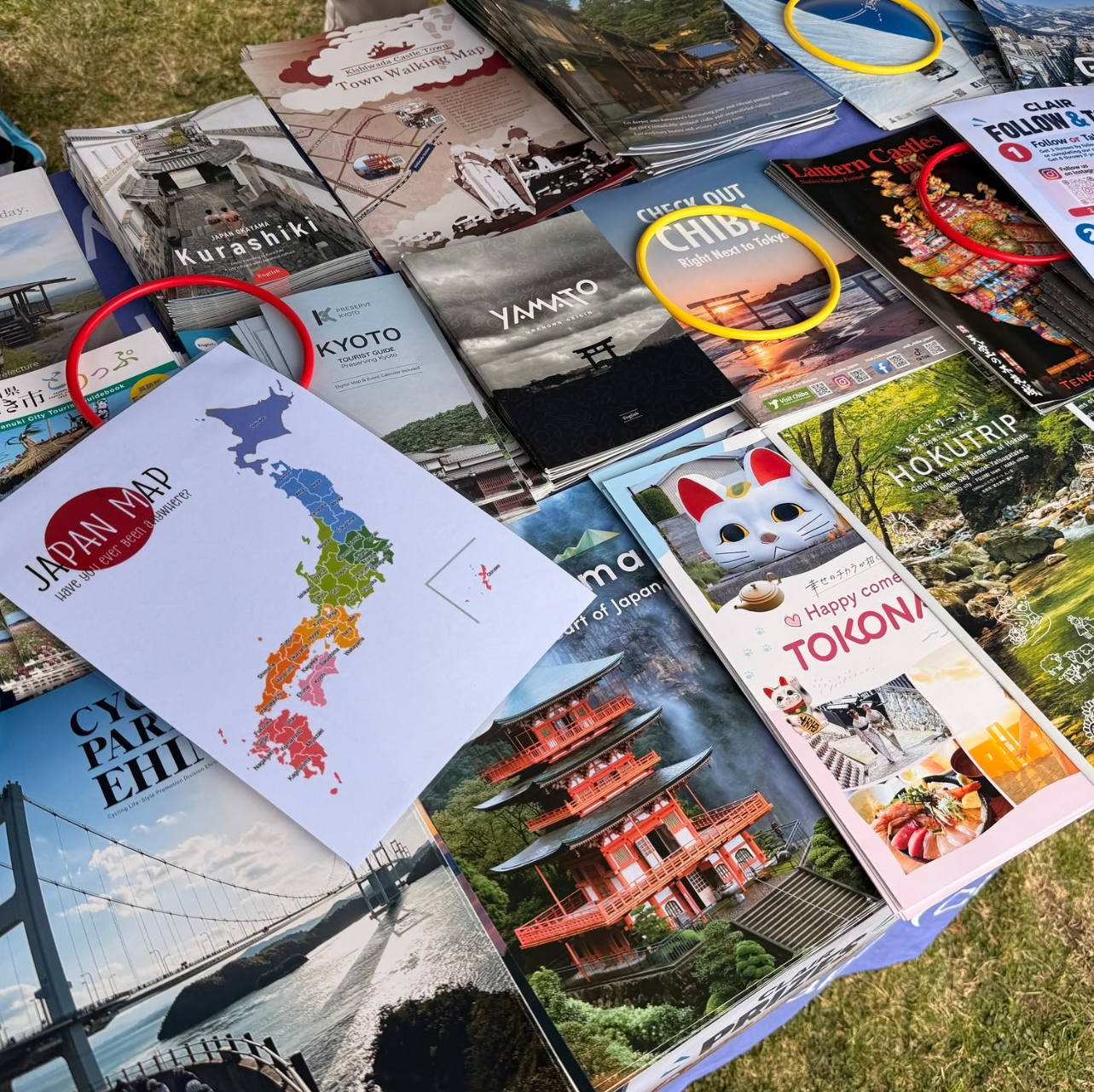
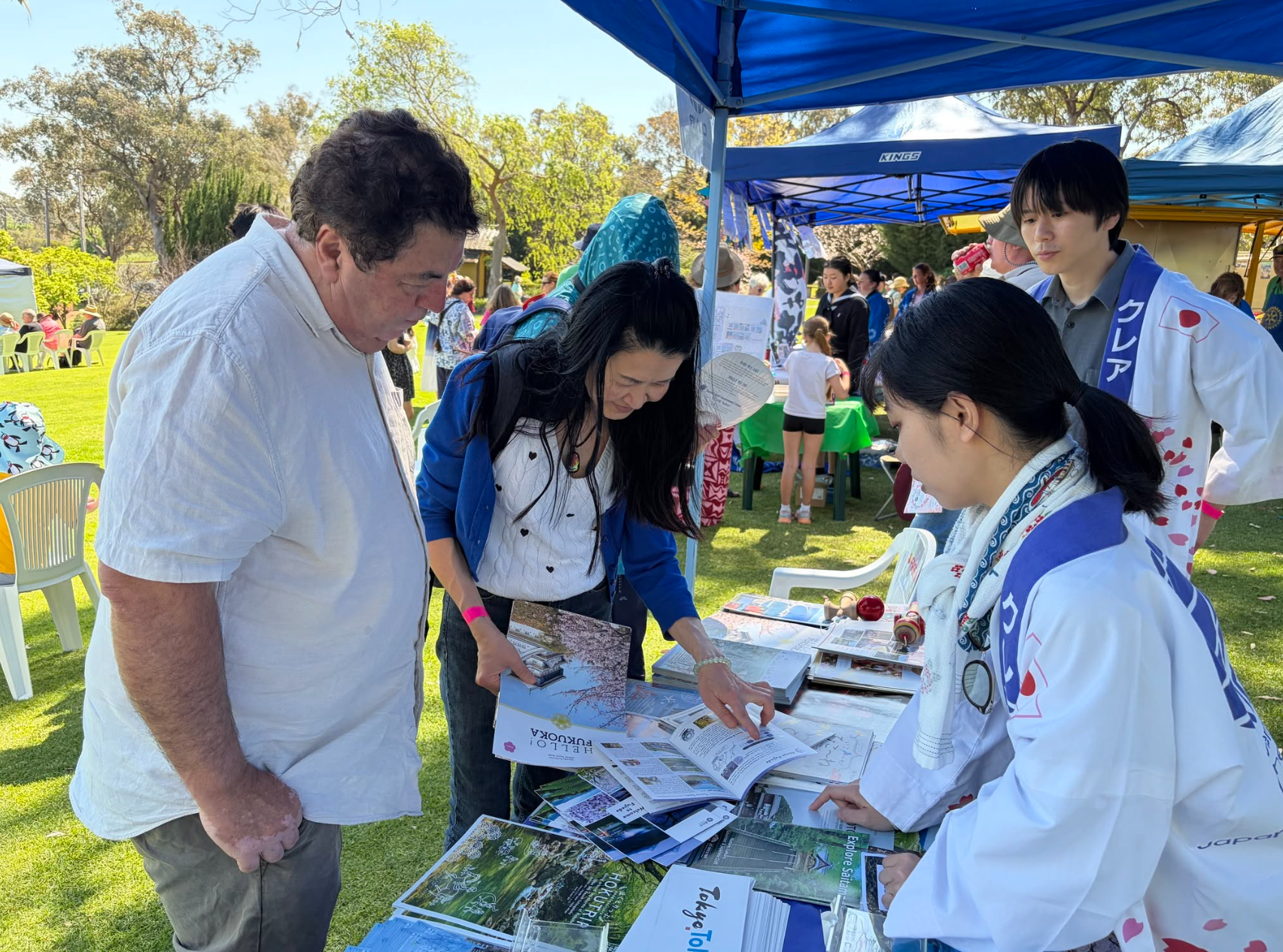
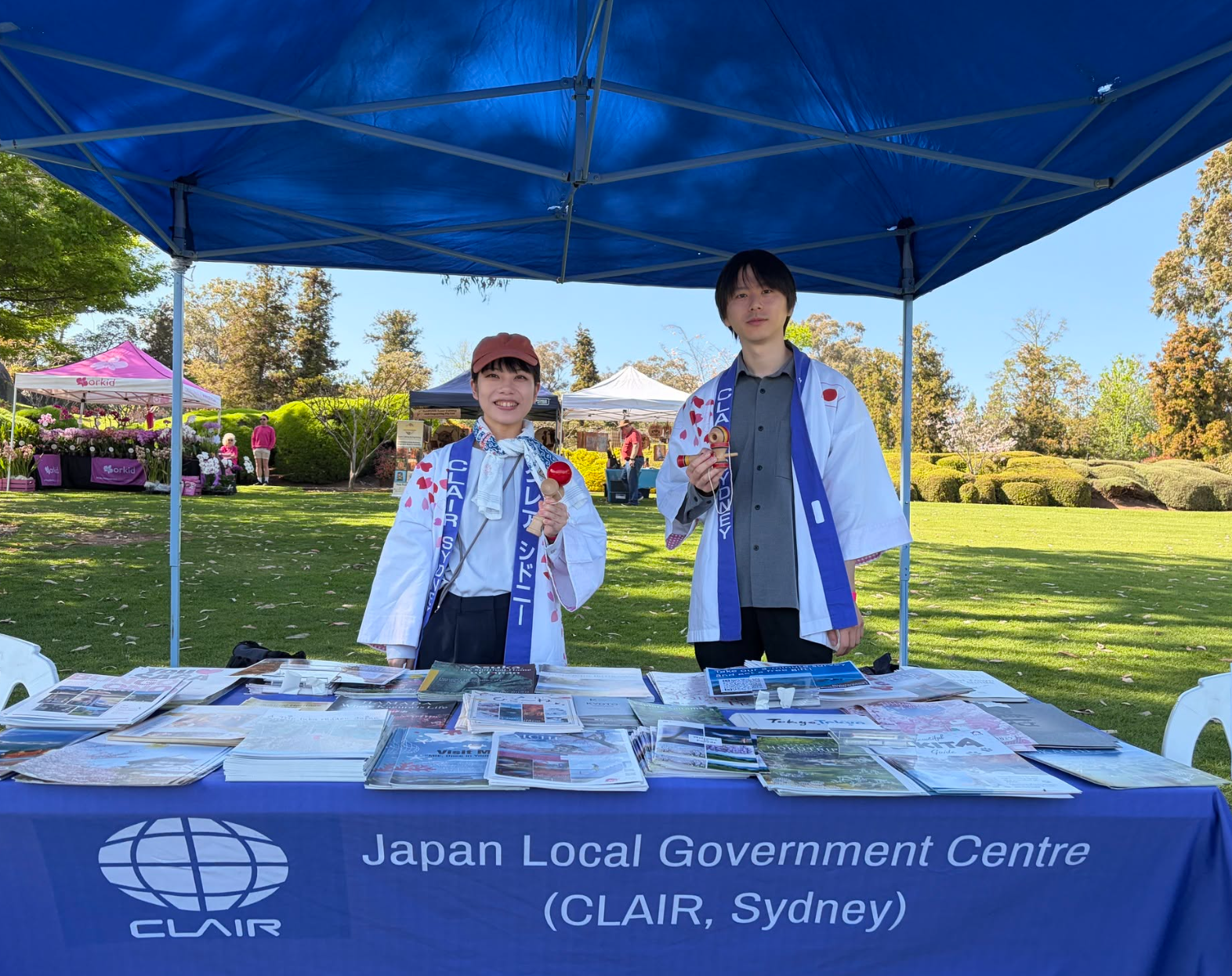
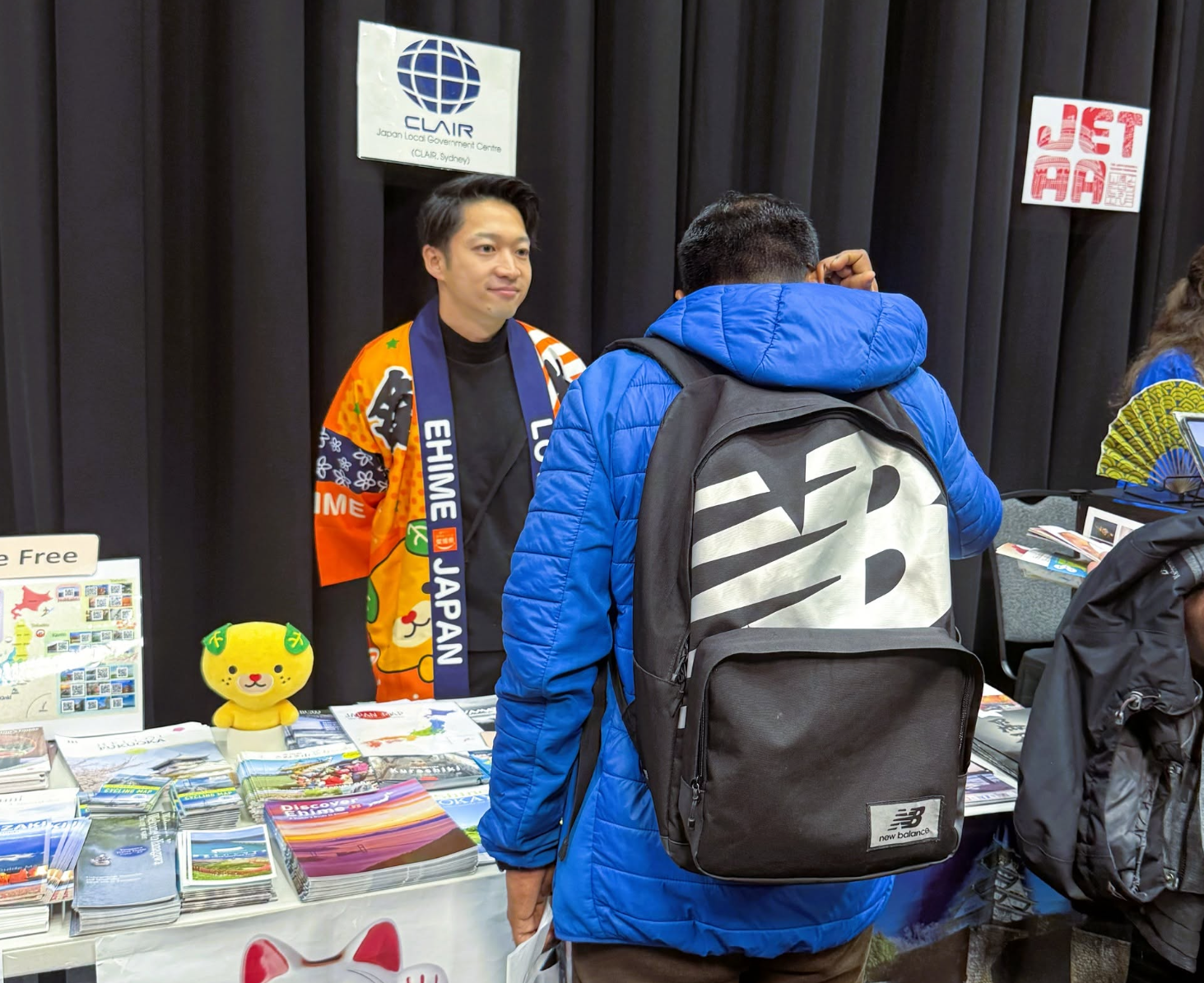
    CLAIR Sydney also hosted a booth, promoting the attractions of regions across Japan through tourism brochures and other materials. Among the visitors to our booth were people planning cruise trips to Japan, as well as others who said they had visited the country more than ten times, reflecting the enduring appeal of Japan as a travel destination. We also spoke to visitors who had started learning Japanese after their travels and were hoping to move there in the future, highlighting a strong interest in Japanese culture and way of life.


    This year marks the 55th anniversary of the sister-city relationship between the City of Whitehorse and Matsudo City in Chiba Prefecture. It is the longest-running Japan–Australia sister-city relationship in the state of Victoria. As part of the exchange program, the venue also displayed letters with hand-drawn illustrations created by residents of Matsudo , offering visitors a glimpse into the strong bond between the two cities.
     
  • On Tuesday, 12 May, the Australia-Japan Society of NSW (AJS-NSW) held an awards ceremony to recognise outstanding achievement in Japanese-related studies. Certificates were presented to seven students, each nominated by a university across the Sydney metropolitan area.
     
     
    Following the presentation ceremony, each award recipient delivered a speech, some in Japanese, reflecting on what inspired them to begin studying the language, its appeal, , the challenges they encountered during their studies, and their future aspirations. Their stories varied widely, ranging from students who began learning the language with the dream of working for a Japanese game company to those whose exchange experiences at Japanese universities enabled them to build friendships with people from around the world.
     
    Many of the students reflected on how learning Japanese had expanded their horizons and future possibilities and expressed their hope to continue taking on new challenges connected to Japan, including working or living there in the future.
    Learning and mastering a language other than one’s mother tongue is never easy. We were deeply moved by the speeches of these students, who spoke passionately about maintaining their connection with Japan even after graduation.
     
    CLAIR Sydney will continue to work closely with Japanese language education institutions and related organisations, further strengthening people-to-people exchanges through Japanese language and culture, and contributing to the ongoing development of Japan-Australia relations.
  • The latest issue of our correspondence is released.

    View this correspondence in PDF.