2026: Nipponia nippon: Returning to Japan’s Skies After Extinction

No account of the history of nature conservation in Japan would be complete without mentioning the Japanese Crested Ibis, known as the toki in Japanese. It is widely regarded as one of Japan’s most symbolic birds, and its scientific name is Nipponia nippon.

The toki is a large waterbird measuring about 80 centimetres in length with a wingspan exceeding 130 centimetres.
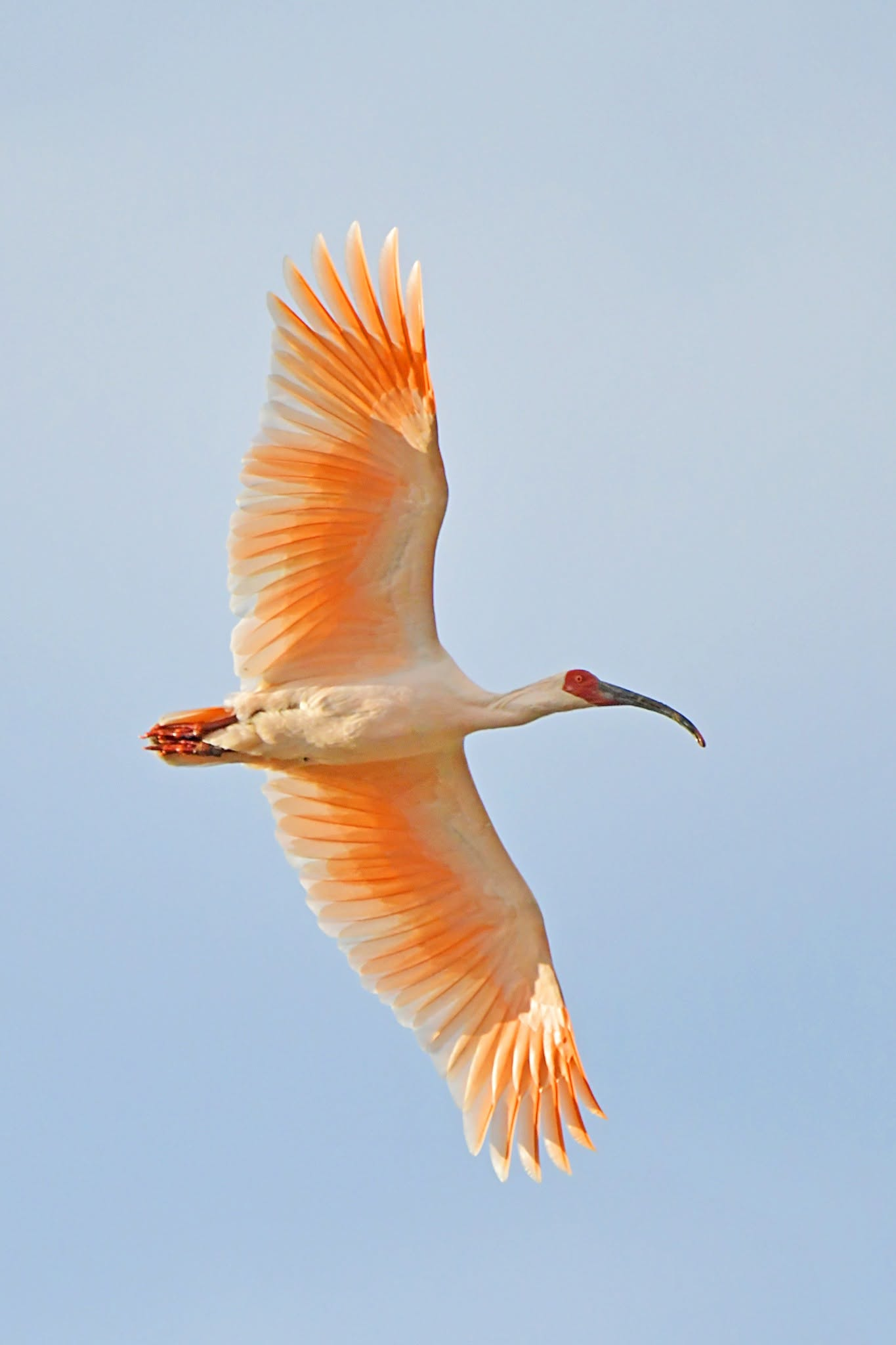
Its plumage is mostly white in colour, and its appearance is somewhat reminiscent of the Australian White Ibis, a familiar sight in many Australian cities. The toki’s wings and tail feathers have a delicate pinkish hue, and watching it soar through the sky is truly a beautiful sight.

Historically, the species was found across Japan, China, the Korean Peninsula, and Taiwan. In Japan, the toki once widely inhabited rural areas, wetlands, and other natural environments.
However, from the late nineteenth century to the twentieth century, its population declined rapidly due to overhunting for its feathers, agricultural expansion, and a reduction in food   sources caused by the widespread use of pesticides.

The habitats that once supported the toki were rich natural environments shared not only by the toki itself but also by a wide variety of other species.
For this reason, efforts to protect and breed the toki are still important not only from the perspective of conserving biodiversity, but also in terms of restoring the rich natural environments that once existed throughout Japan. Against this backdrop, Japan began full-scale conservation efforts for the toki around 1970.

A significant development came in 1981, when seven wild toki, previously believed to be extinct, were discovered in China. Conservation and breeding efforts soon began there as well, and in 1999, China presented Japan with a breeding pair of toki, which produced Japan’s first captive-bred chick.

Despite these efforts, the last wild-born toki in Japan died in 2003, marking the extinction of the country’s wild population.

However, Japan subsequently established successful captive-breeding techniques and the species also began breeding successfully in the wild in Sado, the last refuge of the species in Japan before its extinction in the wild. Today, the wild population has recovered to an estimated 500 or more individuals, and the toki can once again be seen flying freely, particularly over Sado.
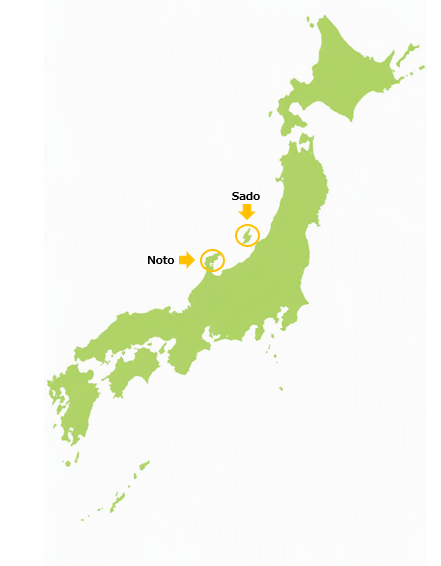
Until recently, captive-bred toki had been released only in Sado. However, because the long-term survival of the species in Japan depends on having populations distributed across multiple regions rather than concentrated in a single area, release efforts have now been extended beyond Sado.

In May 2026, the first release of the toki outside Sado took place in the Noto region of Ishikawa Prefecture. Noto was the last place on the Japanese mainland where the toki survived in the wild until 1970. More than half a century later, many people in Japan have been deeply moved to see the toki flying once again over Noto.

Once lost from Japan’s skies, Nipponia nippon now flies there again, its beautiful, pink-tinted feathers catching the light. The return of a species once extinct in the wild stands as a testament to decades of dedicated conservation efforts. It also reminds us of the importance of preserving a world in which people and nature can coexist in harmony for future generations to come.
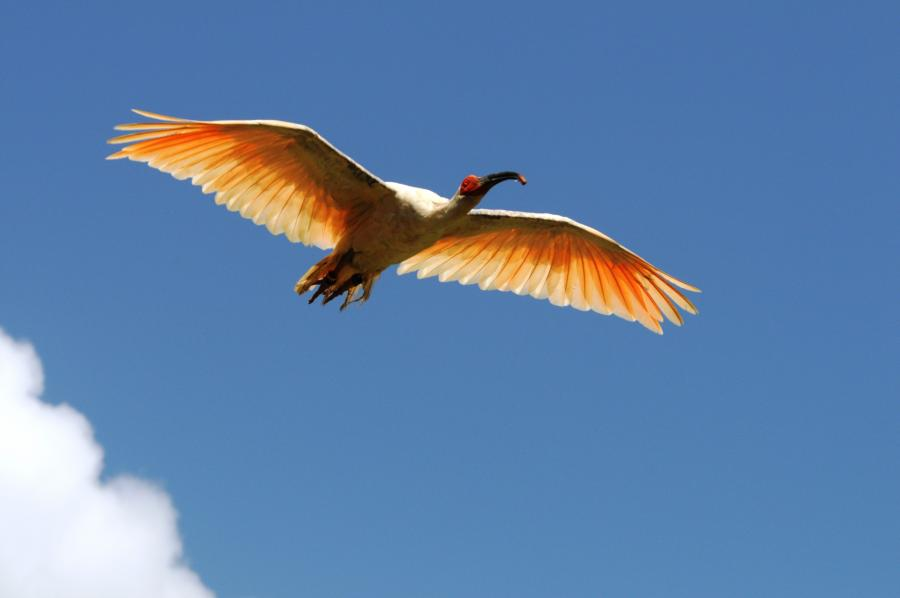


Photo sources:
 Ministry of the Environment, Japan
 Ishikawa Prefectural Government
Posted in From the Executive Director, Uncategorised

Uncategorised

  • Special Exhibition Now Open!
     
    “Ehime Shimbun 150th Anniversary: New Perspectives on Ukiyo-e-Master Artists of the Bakumatsu and Meiji Eras”
    From the late Edo period into the Meiji era, ukiyo-e increasingly served as an early form of mass media while also becoming a popular source of entertainment for the people of the time. Ukiyo-e is also a uniquely Japanese form of printmaking, created through the combined skills of publishers, artists, woodblock carvers, and printers.
     
    In collaboration with the Asai Collection, this exhibition explores the role of ukiyo-e as a medium for conveying information and ideas. Discover a diverse selection of works by master artists who captured the dramatic changes of a transformative era and introduced fresh, innovative styles of expression.
     
    1
    For more information, please visit the official website.
    * Please note that the website is available in Japanese only.
  •  On Monday, 3 August, CLAIR Sydney held a briefing session for 10 lower secondary school students from Ube City, Yamaguchi Prefecture, and their chaperones ahead of their one week homestay in Ube City’s sister city of Newcastle.


    During the briefing, we provided key information about Australia, including its population and land area, as well as what it is like to work overseas. Our intern, a student from a local university, also drew on their own experiences to explain the differences in lifestyles and cultures between Japan and Australia.
    We were particularly impressed by how attentively and enthusiastically the students listened throughout the briefing. We hope their visit to Australia was a rewarding and memorable experience that will continue to inspire them in the years to come.
                                                                                                                                                                                                                                                                                                 
    CLAIR Sydney also supports a wide range of activities undertaken by Japanese local governments in Australia and New Zealand. If you require assistance with your activities, please feel free to contact us.
                                       
  • In early August, 20 high school students from Nagoya City, Aichi Prefecture, a sister city of Sydney, visited Australia. During their visit, they experienced homestay and took part in activities with local high school students.
     
    At the request of Nagoya City, CLAIR Sydney supported the visit by coordinating various programs and arranging appointments with local organisations. These included a visit to Taronga Zoo, the sister zoo of Higashiyama Zoo in Nagoya, as well as opportunities for the students to experience school life in Australia. At a welcome event hosted by the City of Sydney at Sydney Town Hall, the students met with a City Councillor and a member of the Sydney-Nagoya Sister City Committee. They talked about the long-standing friendship between the two cities, including the koalas gifted by Sydney to Higashiyama Zoo and the planting of trees in a Sydney park to commemorate the sister-city relationship.
     
     
    The Nagoya students also gave a short speech and performed a Japanese song, accompanied by a dance, creating a warm and friendly atmosphere at the event.                         


    We hope their experience will continue to inspire friendship and exchange between the people of Nagoya and Sydney!           

  • Newsletter No.203

  • The latest issue of our correspondence is released.

    View this correspondence in PDF.

  •  From late June to early August, CLAIR Sydney attended farewell receptions for new JET Programme participants hosted by Japanese embassies and consulates in Australia and New Zealand.


    Ahead of their departure for Japan, the new participants received advice from former JETs and engaged with fellow participants and reception attendees, building connections before embarking on their new journey. We had the pleasure of hearing not only their goals and aspirations for their work on the JET Programme, but also their excitement for life in Japan, including hopes to travel throughout the country and experience traditional festivals.


    During their time on the JET Programme, we hope that the participants will gain a wide range of professional and personal experiences, contribute to the internationalisation of communities throughout Japan, and continue to serve as vital bridges connecting Japan with Australia and New Zealand long after they return home.
    Good Luck!
    For more details about the JET Programme, please visit the JET Programme official website below:


  • Located in the Northern Hemisphere, Japan is now in the height of summer.

    Many people may associate summers in Japan with intense heat and humidity that can be difficult to endure. Compared to Australia and New Zealand, Japan’s summer climate is generally hotter and more humid, which may not always feel as comfortable.

    However, there’s so much to enjoy in Japan during the summer that you will soon forget all about the heat and humidity. Every year, vibrant festivals, energetic traditional celebrations, and spectacular fireworks displays are held across the country.

    These events provide the perfect opportunity to experience the history and culture of each region, as well as the unique atmosphere of a Japanese summer.

    In this article, I would like to introduce several memorable summer events that I discovered while living in different regions of Japan.


    Akita Kanto Festival: Illuminating Akita’s Summer Night Skies

    Located in Japan’s northern Tohoku region, Akita Prefecture is home to a traditional summer festival known as the Akita Kanto Festival, which has been celebrated for approximately 270 years.

    Every year from 3 to 6 August, the streets of central Akita City are transformed after sunset as around 280 giant bamboo poles, known as kanto, fill the streets, each adorned with rows of illuminated lanterns.

    Source: Akita Kanto Festival Official Site

    The kanto are designed to resemble heavy stalks of rice bending under the weight of abundant grains, symbolising a bountiful harvest.

    The largest poles stand up to 12 metres tall, weigh around 50 kilograms, and carry approximately 50 lanterns.

    Performers, known as sashite, demonstrate extraordinary skill by balancing these towering poles on their palms, foreheads, shoulders, and hips while praying for a bountiful harvest.

    The sight of nearly 10,000 golden lanterns glowing against the summer night sky is truly breathtaking, and the entire venue comes alive with energy and excitement.


    Nishimonai Bon Odori: One of Japan’s Three Great Bon Dances

    Also in Akita, the town of Ugo hosts the Nishimonai Bon Odori from 16 to 18 August each year.

    This traditional event is said to have a history spanning more than 700 years and is regarded as one of Japan’s Three Great Bon Dances.

    From dusk into the evening, dancers dressed in beautiful patchwork kimono perform graceful and elegant movements while concealing their faces with woven hats or black hoods. Unlike the lively atmosphere of typical festivals, the Nishimonai Bon Odori has a mysterious and enchanting quality. Illuminated by bonfires, the dancers seem to emerge from the darkness, creating a captivating spectacle that leaves a lasting impression on all who watch.

    Source: Ugomachi Town Office

     Omagari Hanabi: A Gathering Place for Fireworks Enthusiasts from Across Japan

    Another highlight of Akita’s summer is the National Fireworks Competition known as Omagari Hanabi, held annually on the final Saturday of August.

    Widely regarded as one of Japan’s premier fireworks events, it features spectacular displays by some of the country’s finest pyrotechnicians, selected from across the nation, who captivate the enormous crowds that gather at the venue each year. Watching the fireworks burst overhead while hearing the thunderous sound echo throughout the venue is truly an unforgettable and powerful experience.

    One more unique feature of Omagari Hanabi is its daytime fireworks show, which allow spectators to enjoy colourful smoke patterns and their changing forms in the sky, something rarely seen elsewhere.

    The grand finale consists of approximately 2,500 fireworks launched over about 6 minutes, synchronised with music and based on a different theme or concept each year. For me, the end of Omagari Hanabi was always when I truly felt that summer was drawing to a close.

    Source: Omagari Hanabi Official Site

     Abare Festival: Japan’s Wildest Festival

     In Noto Town, Ishikawa Prefecture, the Abare Festival is held annually on the first Friday and Saturday of July and is one of Japan’s most unique festivals.

    With a history believed to span around 350 years, this festival is held to ward off illness and pray for the prosperity of the local community. Around 40 giant lantern floats, known as kiriko, each standing approximately 7 metres tall, parade through the town. At night, they gather in the central square and make their way around enormous bonfires.

    It is believed that those who are showered by sparks from the bonfires will receive blessings.

    Source: Abare Festival Official Site

    As a result, the Kiriko bearers strive to bring their floats as close to the flames as possible and circle them repeatedly in search of good fortune.

    The festival reaches its dramatic finale when two mikoshi (portable shrines) are thrown into the sea, rivers, and even fires, or slammed onto the ground until they are almost completely destroyed.

    This extraordinary ritual stems from the belief that such acts please the deities residing within the mikoshi and allows people to deepen their connection to them.

    The Abare Festival is an energetic celebration where, amid its wild and powerful displays, visitors can experience the deep-rooted history, culture, and pride of the local community.


    The Magic of Japanese Summer

    Many people may hesitate to visit Japan during the summer. However, as highlighted above, this season offers unique events and experiences that can only be enjoyed at this time of year. Through these festivals and celebrations, visitors can experience the distinct histories, cultures, and community spirit of different regions across Japan, making the opportunity to encounter these local traditions one of the greatest highlights of a Japanese summer.

    If you have the chance to visit Japan during the summer, I highly encourage you to experience the festivals and fireworks events held across the country. They are sure to leave you with unforgettable memories that make you forget the heat and humidity, along with a deeper appreciation for the richness of Japanese culture that has been carefully preserved and passed down through generations.


  •  Following the signing of a Memorandum of Understanding (MOU) in December 2023 between Fukuoka Prefecture, the Fukuoka Swimming Association, and Swimming NSW, Fukuoka Prefecture and New South Wales have continued to foster exchanges between athletes and coaches from both regions through swimming. The ongoing partnership aims to promote participation in swimming and enhance competitive performance.     

    In November 2024, Fukuoka welcomed 10 swimmers representing NSW and 5 coaches to participate in a training camp ahead of the Japan Open held in Tokyo. In addition to the training sessions, participants enjoyed sightseeing and cultural experiences in Fukuoka, while coaches from both regions also had the opportunity to connect with one another and deepen mutual understanding and friendship.


    In December 2024 and December 2025, Fukuoka sent a delegation of 8 selected swimmers and 2 coaches to NSW. The delegations were warmly welcomed by students and staff at Knox Grammar School in 2024 and Trinity Grammar School in 2025. During their stay, the athletes took part in joint training sessions and shared meals with the schools’ swimming teams, competed in local age-group championships, and participated in other cultural exchanges. These experiences provided valuable international exposure and contributed to the further development of their competitive skills. 


    Fukuoka plans to continue this exchange programme in 2026, once again sending selected swimmers and coaches to NSW. Through joint training sessions, interactions with world-class NSW athletes and coaches, and participation in competitions, Fukuoka aims to further strengthen the sporting abilities of its athletes while fostering the next generation of globally minded individuals.


    Furthermore, Fukuoka Prefecture is currently preparing for the opening of the Fukuoka International Training Centre in 2029, with the aim of enhancing international competitive performance. The centre will bring together athletes and sports professionals from Japan and overseas, including across the Asia-Pacific region, providing world-class support in training, recovery, and sports nutrition. Fukuoka looks forward to welcoming athletes and organisations from around the world to this new centre, where they can train, connect, and further strengthen international sporting partnerships.


  •  On Tuesday, 21 July, CLAIR Sydney conducted an online briefing for two delegations from Oyama City that will visit their sister city, Cairns, in late August. The delegations included the Oyama City Citizens’ Delegation for the 20th anniversary of the Oyama-Cairns Sister City Agreement, and the Oyama City Junior High School Student Delegation.


    The briefing covered an overview of Australia, including its government, economy, and history, as well as information on sister city exchanges, the cost of living, and practical tips for daily life in Australia.
    During the Q&A session, participants asked a wide range of questions covering topics from government and public administration to Australian culture, customs, and everyday life. Their enthusiasm and eagerness to deepen their understanding of Australia ahead of their visit were evident throughout the session.
     
    In addition to the briefing, CLAIR Sydney also provided support in arranging appointments with organisations that the delegations plan to visit during their stay. We wish them a rewarding and memorable visit to Cairns.
    CLAIR Sydney also supports a wide range of activities undertaken by Japanese local governments in Australia and New Zealand. If you require assistance with your activities, please feel free to contact us.
  • Kitakyushu Manga Museum is now accepting entries for its Four-Panel Manga Competition.
    <Entry Details>
    Divisions: General Division, Junior Division (for participants aged 12 or under as of April 1, 2027)
    * Open to both professional and amateur manga creators
    Theme: “Sing”(theme for both the General and Junior Divisions)
    Eligible Works: Original, unpublished works created by the entrant themselves

    Entry Period: From 11:00 AM (JST) on Monday, June 1, 2026, to 2:00 PM (JST) on Wednesday, September 2, 2026.

    <Announcement of Award-Winning Works >

    The winners will be announced on the official Kitakyushu International Manga Competition website from late November to early December 2026. The winning entries and selected outstanding works will also be published on the website.

    <How to Apply >
    All entries must be submitted through the official website.
    Entrants should complete the online entry form and upload a digital file of their work.
    For inquiries about submissions: manga@kitakyushu-mangataisho.com
    Other inquiries: manga@city.kitakyushu.lg.jp