The Japan Exchange and Teaching (JET) Programme is one of the world’s largest international exchange programmes, established by the Japanese government in 1987. Its purpose is to promote grassroots internationalisation in local communities across Japan, foster mutual understanding between Japan and other countries, enhance foreign language education, and develop globally-minded individuals. Through the programme, participants from around the world come to Japan to work in local governments and schools, where they contribute to international exchange activities and foreign language education.
Each year, from late July to early August, most new participants from Australia and New Zealand depart for Japan to begin their JET experience. Having just seen off this year’s new participants, I would like to take this opportunity to introduce the JET Programme once again.
Participating Countries and Number of Participants
When the programme first began in 1987, there were 848 participants from just four countries: Australia, New Zealand, the United
Kingdom, and the United States of America. As the programme marks its 40th anniversary in 2026, it has grown to include 5,734 participants from 53 countries around the world.
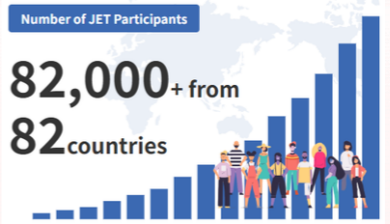
The programme’s growth over the past 4 decades has been remarkable. To date, more than 82,000 participants from 82 countries have taken part in the JET Programme. Among them, 5,138 participants have come from Australia, while 3,713 participants have come from New Zealand. The contribution of both countries to the success and development of the programme has been invaluable.
Australia and New Zealand have been involved in the JET Programme since its inception. Today, many JET alumni continue to play active roles across a wide range of fields, serving as bridges between Japan and their home countries while contributing to deeper mutual understanding and stronger friendships between Japan, Australia, and New Zealand.
Three Positions within the JET Programme
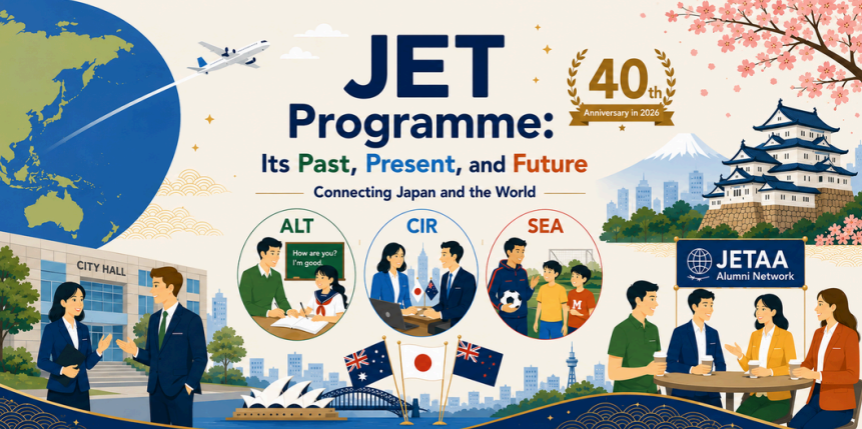
There are 3 types of positions on the JET Programme. While appointments are initially for one year, participants may, with the agreement of both the participant and their contracting organisation, renew their appointment for up to a maximum of 5 years.
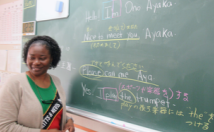
・ALT (Assistant Language Teacher): 5,238 Participants (as of July 2026)
ALTs are primarily assigned to elementary, junior high, and senior high schools. They assist Japanese teachers in foreign language classes and often support extracurricular activities such as English clubs. More than 90 percent of all JET participants serve as ALTs.
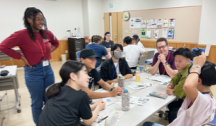
・CIR (Coordinator for International Relations): 481 Participants (as of July 2026)
CIRs are primarily assigned to the international affairs divisions of local governments. Their duties include translation and interpretation, assisting with official visits from overseas guests, and organising activities that promote intercultural understanding within local communities. CIRs possess advanced Japanese language proficiency that enables them to carry out these responsibilities effectively.
・SEA (Sports Exchange Advisor): 15 Participants (as of July 2026)
SEAs are primarily assigned to sports-related departments of local governments, where they promote international exchange through sports and engage in activities such as sports coaching and instruction.

The Role of CLAIR in Supporting the JET Programme
The JET Programme is administered through the close cooperation of Japan’s Ministry of Internal Affairs and Communications (MIC), Ministry of Foreign Affairs (MOFA), Ministry of Education, Culture, Sports, Science and Technology (MEXT), and the Council of Local Authorities for International Relations (CLAIR).
At CLAIR, we are responsible for coordinating participant placements and delivering training programmes for participants. In addition, we support participants’ career development after completing the programme through initiatives such as career fairs and internship programmes for those interested in pursuing careers in Japan.
We also continue to support JET alumni after they return to their home countries by providing support, including financial assistance, for the activities of the JET Programme Alumni Association (JETAA), which currently maintains 57 chapters across 21 countries and regions worldwide.
The Ongoing Contributions of JET Alumni from Australia and New Zealand
Each JETAA chapter is managed by a committee of dedicated volunteers who previously participated in the JET programme. Currently, there are a total of 8 chapters in the Oceania region: 5 chapters in Australia and 3 chapters in New Zealand.
These chapters undertake a wide range of activities, including supporting prospective JET participants, organising networking events to assist JET alumni with their career development, and facilitating exchanges with local Japanese communities.
In addition, the Oceania Conference is held annually, bringing together all 8 chapters from the Oceania region, along with the Singapore chapter, for a total of 9 participating chapters. During the conference, participants share recent initiatives and engage in lively discussions on ways to further develop the JET Programme.
Our office also produces the “”, a publication showcasing the achievements of JET alumni from Australia and New Zealand following their completion of the programme. The testimonials were first published in March 2021, and we are currently preparing a new edition, which we look forward to introducing in this newsletter once completed.
Forty Years of Achievement and Looking to the Future
Celebrating its 40th anniversary in 2026, the JET Programme has built a global network of people-to-people connections through more than 82,000 participants over the course of its history.
We would like to once again express our deepest appreciation to the many JET alumni from Australia and New Zealand. We also hope that the JET Programme will continue to inspire future generations and serve as a bridge, strengthening the bonds of friendship and mutual understanding between Japan, Australia and New Zealand, as well as countries around the world, for many years to come.