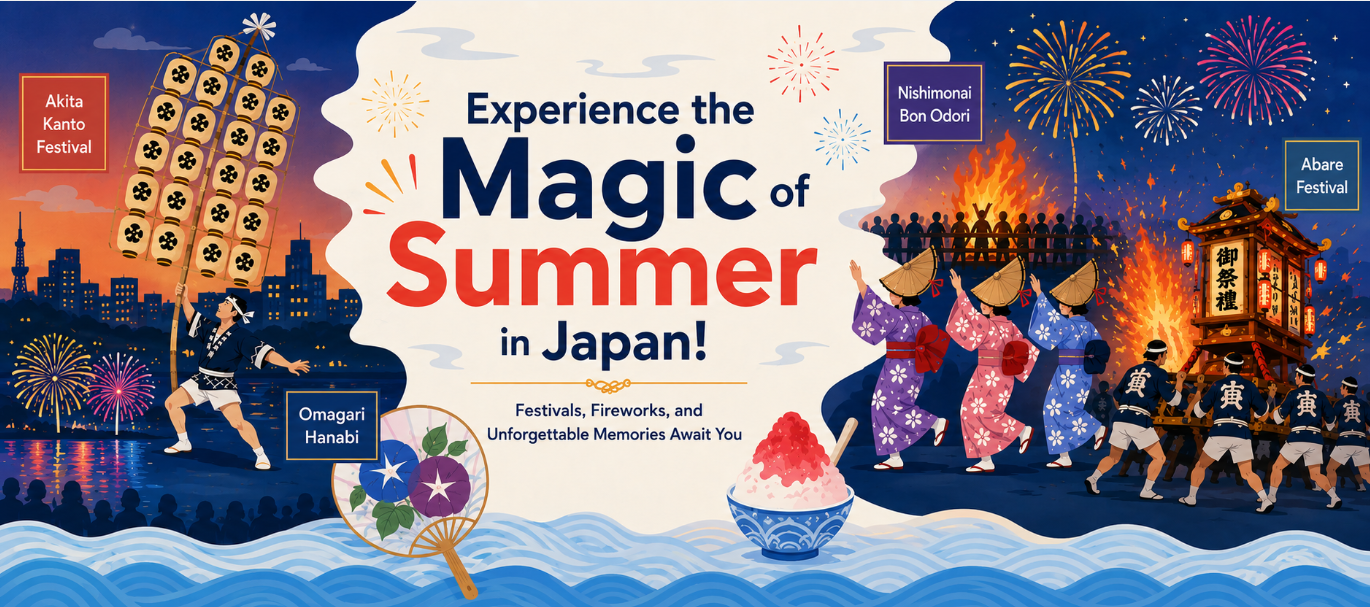
Located in the Northern Hemisphere, Japan is now in the height of summer.
Many people may associate summers in Japan with intense heat and humidity that can be difficult to endure. Compared to Australia and New Zealand, Japan’s summer climate is generally hotter and more humid, which may not always feel as comfortable.
However, there’s so much to enjoy in Japan during the summer that you will soon forget all about the heat and humidity. Every year, vibrant festivals, energetic traditional celebrations, and spectacular fireworks displays are held across the country.
These events provide the perfect opportunity to experience the history and culture of each region, as well as the unique atmosphere of a Japanese summer.
In this article, I would like to introduce several memorable summer events that I discovered while living in different regions of Japan.
Akita Kanto Festival: Illuminating Akita’s Summer Night Skies
Located in Japan’s northern Tohoku region, Akita Prefecture is home to a traditional summer festival known as the Akita Kanto Festival, which has been celebrated for approximately 270 years.
Every year from 3 to 6 August, the streets of central Akita City are transformed after sunset as around 280 giant bamboo poles, known as kanto, fill the streets, each adorned with rows of illuminated lanterns.
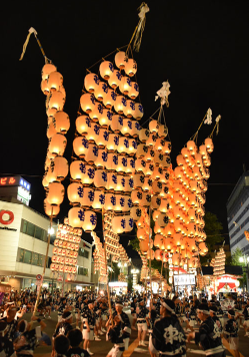
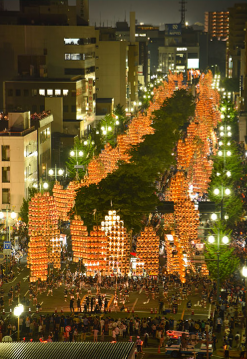
Source: Akita Kanto Festival Official Site
The kanto are designed to resemble heavy stalks of rice bending under the weight of abundant grains, symbolising a bountiful harvest.
The largest poles stand up to 12 metres tall, weigh around 50 kilograms, and carry approximately 50 lanterns.
Performers, known as sashite, demonstrate extraordinary skill by balancing these towering poles on their palms, foreheads, shoulders, and hips while praying for a bountiful harvest.
The sight of nearly 10,000 golden lanterns glowing against the summer night sky is truly breathtaking, and the entire venue comes alive with energy and excitement.
Nishimonai Bon Odori: One of Japan’s Three Great Bon Dances
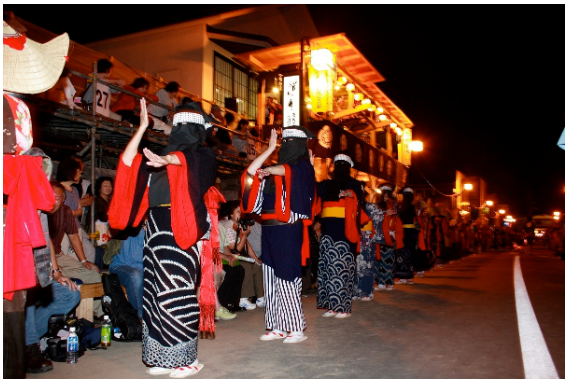
Also in Akita, the town of Ugo hosts the Nishimonai Bon Odori from 16 to 18 August each year.
This traditional event is said to have a history spanning more than 700 years and is regarded as one of Japan’s Three Great Bon Dances.
From dusk into the evening, dancers dressed in beautiful patchwork kimono perform graceful and elegant movements while concealing their faces with woven hats or black hoods. Unlike the lively atmosphere of typical festivals, the Nishimonai Bon Odori has a mysterious and enchanting quality. Illuminated by bonfires, the dancers seem to emerge from the darkness, creating a captivating spectacle that leaves a lasting impression on all who watch.
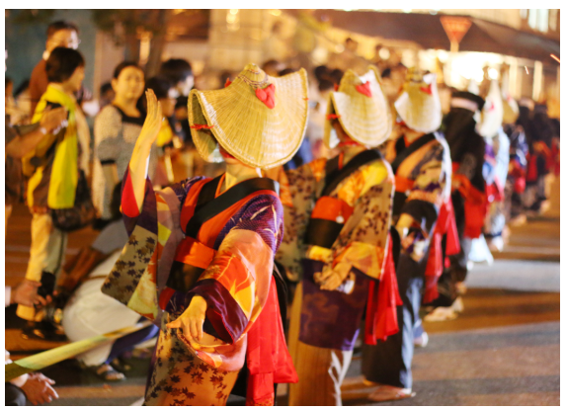
Source: Ugomachi Town Office
Omagari Hanabi: A Gathering Place for Fireworks Enthusiasts from Across Japan
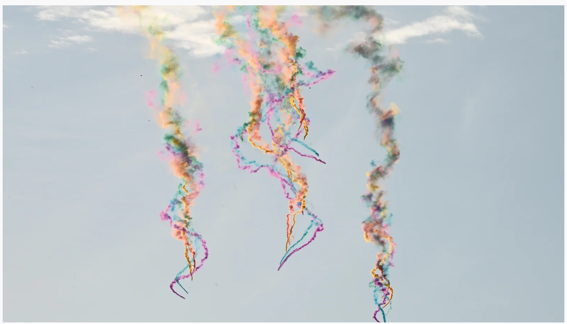
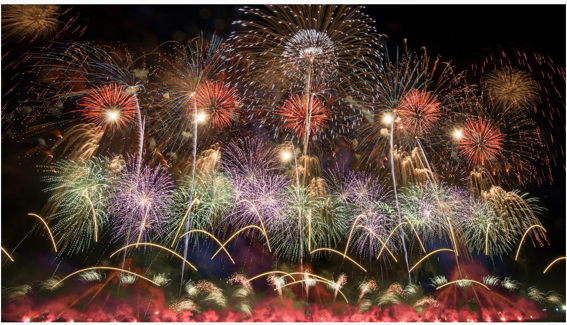
Another highlight of Akita’s summer is the National Fireworks Competition known as Omagari Hanabi, held annually on the final Saturday of August.
Widely regarded as one of Japan’s premier fireworks events, it features spectacular displays by some of the country’s finest pyrotechnicians, selected from across the nation, who captivate the enormous crowds that gather at the venue each year. Watching the fireworks burst overhead while hearing the thunderous sound echo throughout the venue is truly an unforgettable and powerful experience.
One more unique feature of Omagari Hanabi is its daytime fireworks show, which allow spectators to enjoy colourful smoke patterns and their changing forms in the sky, something rarely seen elsewhere.
The grand finale consists of approximately 2,500 fireworks launched over about 6 minutes, synchronised with music and based on a different theme or concept each year. For me, the end of Omagari Hanabi was always when I truly felt that summer was drawing to a close.
Source: Omagari Hanabi Official Site
Abare Festival: Japan’s Wildest Festival
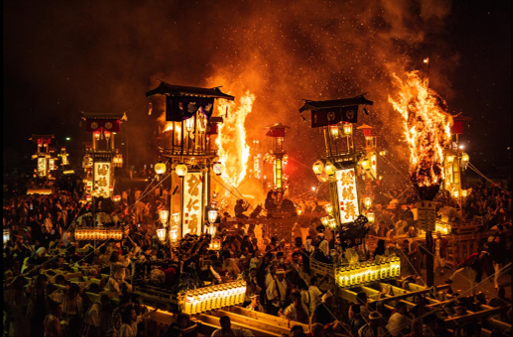
In Noto Town, Ishikawa Prefecture, the Abare Festival is held annually on the first Friday and Saturday of July and is one of Japan’s most unique festivals.
With a history believed to span around 350 years, this festival is held to ward off illness and pray for the prosperity of the local community. Around 40 giant lantern floats, known as kiriko, each standing approximately 7 metres tall, parade through the town. At night, they gather in the central square and make their way around enormous bonfires.
It is believed that those who are showered by sparks from the bonfires will receive blessings.
Source: Abare Festival Official Site
As a result, the Kiriko bearers strive to bring their floats as close to the flames as possible and circle them repeatedly in search of good fortune.
The festival reaches its dramatic finale when two mikoshi (portable shrines) are thrown into the sea, rivers, and even fires, or slammed onto the ground until they are almost completely destroyed.
This extraordinary ritual stems from the belief that such acts please the deities residing within the mikoshi and allows people to deepen their connection to them.
The Abare Festival is an energetic celebration where, amid its wild and powerful displays, visitors can experience the deep-rooted history, culture, and pride of the local community.
The Magic of Japanese Summer
Many people may hesitate to visit Japan during the summer. However, as highlighted above, this season offers unique events and experiences that can only be enjoyed at this time of year. Through these festivals and celebrations, visitors can experience the distinct histories, cultures, and community spirit of different regions across Japan, making the opportunity to encounter these local traditions one of the greatest highlights of a Japanese summer.
If you have the chance to visit Japan during the summer, I highly encourage you to experience the festivals and fireworks events held across the country. They are sure to leave you with unforgettable memories that make you forget the heat and humidity, along with a deeper appreciation for the richness of Japanese culture that has been carefully preserved and passed down through generations.