Last October, Japan welcomed its first female Prime Minister in the nation’s history. Prime Minister Sanae Takaichi dissolved the House of Representatives only a few months into her term, stating that she wanted to ‘secure a clear mandate from the people.’ As a result, a general election for the House of Representatives was held on 8 February 2026.
The National Diet of Japan is a two-house parliament, as is the case in Australia. The upper house, the House of Councillors (Sangiin), corresponds to the Australian Senate, while the lower House of Representatives (Shugiin), serves a similar role to Australia’s House of Representatives. The government is formed by the party that holds a majority in the lower house, like Australia. The terms of the two houses are six years and four years respectively, but the lower house is often dissolved by the Prime Minister, who, like in Australia, is chosen from the lower house. As a result, elections are usually held every two to three years.
In the recent election, the Liberal Democratic Party (LDP) increased its number of seats significantly and is said to have achieved its largest victory since its founding in 1955. Of the 465 seats in the House of Representatives, the LDP won 316 seats on its own. Combined with its coalition partner, the Japan Innovation Party (JIP), the total rose to 352 seats. As a result, the LDP alone secured more than a two-thirds majority in the House of Representatives (with two-thirds equivalent to 310 seats).

In Japan, a bill generally must be approved by both houses in order to become law. However, if the House of Representatives approves the bill with a more than two-thirds majority, it can pass the bill again even if the House of Councillors rejected it, allowing the bill to be enacted. At present, neither the LDP alone nor the governing coalition of the LDP and JIP holds a majority in the House of Councillors. For this reason, the fact that the LDP by itself secured more than a two-thirds majority in the House of Representatives is of great significance to the Takaichi administration. Close attention will be paid to how the administration proceeds from here in the months ahead.








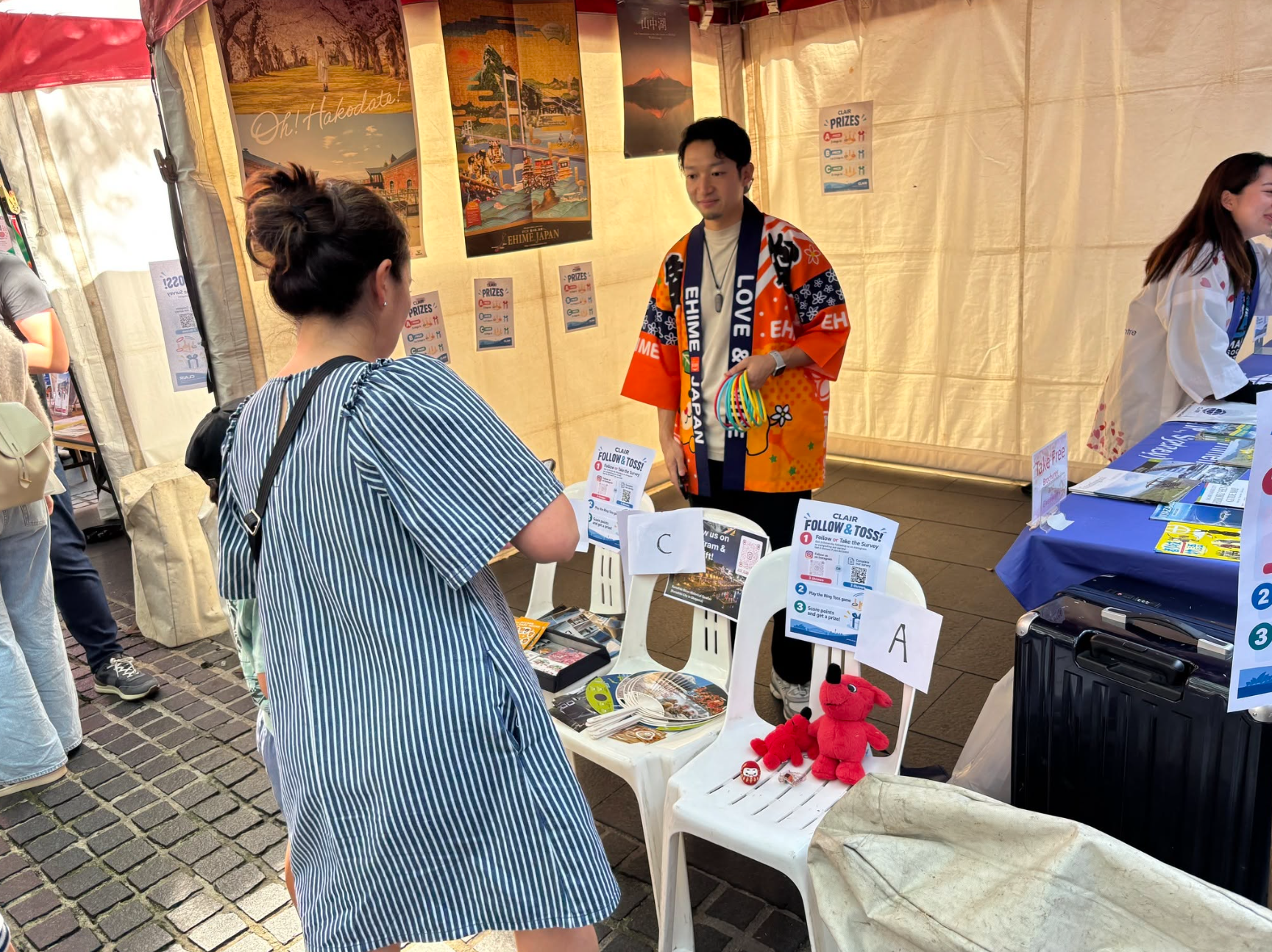
 Many visitors stopped by our booth to ask for recommendations for their next trip to Japan. Some also shared what they love about Japan’s beaches and how they differ from those on the Gold Coast. It was wonderful to meet so many people whose travels had deepened their appreciation for Japan’s nature, food and traditional culture.